
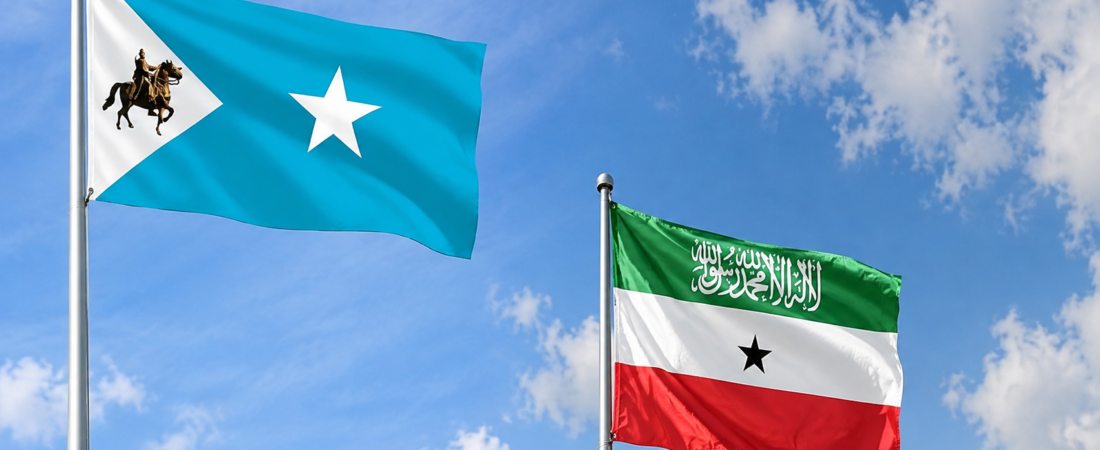
The political landscape of the Horn of Africa remains profoundly shaped by the memories of its civil conflicts. Among the most sensitive and polarizing chapters in the modern history of the region are the mass casualty events in Borama in 1991 and Las Anod in 2023. While separating these events by over three decades reveals distinct political contexts, both underscore the devastating human cost of unresolved clan dynamics, territorial disputes, and the heavy toll paid by civilian populations.
1. The 1991 Borama Tragedy: The Dawn of Sub State Collapse
In January 1991, the Somali President Siad Barre collapsed, triggering an immediate and chaotic struggle for power across the country.
As SNM forces advanced into the western city of Borama, the capital of the Awdal region primarily inhabited by the Gadabursi clan, a major tragedy unfolded.
The Context of Reprisal
Throughout the civil war, the Barre regime had deliberately armed local peripheral clans, including sections of the Gadabursi, utilizing them as counter insurgency militias against the SNM. When the central government collapsed, the retreat of Barre’s loyalist soldiers into Borama brought the pursuing SNM forces into immediate, volatile contact with local populations.
The Human Toll
What followed is remembered by local communities as a targeted campaign of revenge and mass slaughter. Widespread looting, executions, and destruction swept through civilian neighborhoods. While some historical estimates conservatively placed the death toll between 200 and 300 individuals during the seizure of the town, local elders and religious figures recorded far higher numbers. A prominent local imam, Sheikh Hassan Deheeye, documented counting 764 bodies the morning after the primary assault.
Conversely, SNM leadership historically framed the operation as a brief, intense battle to eliminate remaining pro Barre forces. Recognizing the severe danger of a spiraling inter-clan war, SNM commanders withdrew their units within 48 hours, paving the way for traditional elders to intervene. This tragedy ultimately accelerated the landmark 1991 Borama Peace Conference, which established an uneasy reconciliation and laid the foundation for Somaliland’s unilateral declaration of independence later that year.
2. The 2023 Las Anod Conflict: A Modern Sovereignty Crisis
Thirty-two years after the events of Borama, a different but similarly devastating conflict erupted on the opposite side of Somaliland, in the eastern Sool region. By 2023, the SNM had long been dissolved, replaced by the modern, institutionalized Somaliland National Army. However, the foundational issues of territorial sovereignty and clan representation remained raw.
Las Anod, a city predominantly inhabited by the Dhulbahante clan, had been under the administrative control of Somaliland since 2007. For years, local populations expressed growing resentment over alleged political marginalization and a wave of unsolved assassinations targeting local intellectuals and leaders.
From Protests to Urban Warfare
In late December 2022, the assassination of a popular opposition politician sparked mass civilian protests. Somaliland security forces responded with live ammunition, escalating tensions exponentially. By February 2023, traditional Dhulbahante leaders declared that they no longer recognized the authority of Hargeisa, pledging allegiance instead to the Federal Government of Somalia under a newly formed regional administration known as SSC-Khatumo.
Full scale military operations broke out between the Somaliland National Army and newly formed local clan militias.
Heavy Weaponry and Indiscriminate Shelling
The 2023 conflict was characterized by intense urban combat and heavy artillery use. International watchdogs heavily condemned the Somaliland military for launching indiscriminate shelling campaigns into densely populated civilian areas. The bombardments severely damaged critical civilian infrastructure, destroying homes, schools, mosques, and multiple hospitals.
The casualty figures from the months of fighting reflect a major humanitarian disaster:
- Casualties: Hospital registries and local tracking committees documented well over 300 to 600 civilian deaths, with thousands more sustaining severe injuries. The United Nations Somalia Assistance Mission (UNSOM) independently verified hundreds of civilian casualties within the primary months of the outbreak.
- Displacement: The violence triggered an exodus, forcing between 150,000 and 200,000 people to flee their homes. Tens of thousands crossed the border into neighboring Ethiopia as refugees, destabilizing an already fragile border region.
The Military Aftermath
The heavy fighting reached a turning point in August 2023. Local SSC-Khatumo forces launched a coordinated counter offensive, completely overrunning the primary Somaliland military base at Goojacade, just outside Las Anod. Somaliland forces were pushed into a significant retreat westward. Shortly after, the Federal Government of Somalia officially recognized SSC-Khatumo as an interim federal administrative unit.
Conclusion: The Legacy of Peripheral Grievances
While separated by generations, the 1991 Borama tragedy and the 2023 Las Anod war share a common thread: they represent explosive flashpoints where the borders claimed by the central Somaliland government collided with the desires of peripheral clans seeking alignment with a unified Somalia.
For the survivors and descendants in Borama and Las Anod, these events are not viewed merely as collateral damage of war, but as profound violations that continue to fuel political distrust. For the Horn of Africa to achieve long term stability, historical accountability and genuine dialogue regarding regional self-determination remain imperative.