
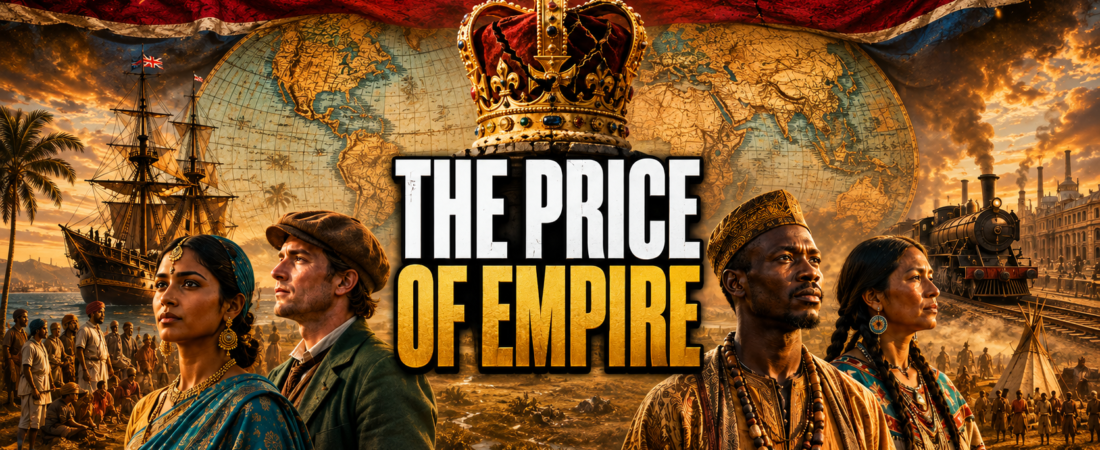
The British Empire is often remembered through maps, monuments, and stories of global power. But behind that image lies another history one shaped by famine, forced displacement, slavery, economic exploitation, and borders drawn without the consent of the people who lived there.
In Ireland, the Great Famine killed approximately one million people and forced another million to leave the country. Although potato blight destroyed the main food crop, food continued to be exported from Ireland while many families starved turning a natural disaster into a catastrophe intensified by British policies.
India suffered repeated famines under British rule. Colonial taxation, grain exports, and limited relief worsened several of these crises. During the Bengal famine of 1943, an estimated two to three million people died while wartime decisions and failures in food distribution deepened the suffering.
Across Africa, the Caribbean, Australia, and North America, imperial expansion also relied on slavery, forced labor, land seizure, and the displacement of Indigenous communities. Wealth and raw materials flowed toward Britain, while many colonized societies were left with damaged economies and institutions designed primarily to serve the empire.
The consequences did not end when the empire disappeared. Borders drawn for imperial convenience divided communities, combined rival groups, and contributed to conflicts that continued after independence. Understanding the British Empire therefore requires looking beyond its celebrated achievements and confronting the human price paid by millions of people.
History should not be reduced to pride or blame. It should help us understand how decisions made in the past continue to shape inequality, borders, migration, and political conflict today. The full story of empire includes both what it built and what it destroyed and the people who paid the price deserve to be remembered.