
THE WIDER CHRONICLE
October 12, 2026 | Somali Briefing
Federal agents searched Representative Ilhan Omar’s Washington-area home early Monday, bringing an investigation involving the Minnesota congresswoman into public view just weeks before the November midterm elections. The Justice Department confirmed that Homeland Security Investigations carried out a court-authorized search as part of an ongoing federal investigation. Reuters reported, citing a person familiar with the inquiry, that it concerns alleged immigration fraud, including paperwork completed by Omar’s late father when she was a child. Those allegations remain unproven, and the search itself does not establish wrongdoing.
What happened
The operation was conducted by Homeland Security Investigations, the investigative branch of Immigration and Customs Enforcement. The Justice Department’s public statement confirmed the warrant but did not explain the specific alleged offense, the evidence investigators were seeking, or how Omar personally might be implicated. That distinction matters: confirmation that a search occurred is considerably narrower than confirmation that the allegations behind it are true.
Omar’s office denied wrongdoing and described the search as an abuse of federal power. Omar also characterized the action as political intimidation and said she would not be silenced. Her response presents a direct challenge to the administration’s handling of the investigation, but it does not settle the underlying factual questions. Those questions require evidence that can be examined rather than competing political declarations.
Why the timing matters
The search comes ahead of the November 3 election, in which Omar is seeking another term representing Minnesota. Associated Press reporting said Democratic leaders questioned the timing, pointing to longstanding Justice Department practices intended to avoid investigative actions that could affect an election. Their objections place the handling of the inquiry, as well as its substance, at the center of the controversy.
The proximity to an election deserves scrutiny, but timing alone cannot establish an improper motive. A responsible assessment must consider what investigators knew, when they knew it, and why a search was necessary at this particular moment. Equally, describing an operation as a criminal investigation cannot substitute for answering those questions. Public confidence depends on institutions applying the same standards to political allies and opponents.
The unanswered question about childhood paperwork
The reported connection to documents prepared by Omar’s father during her childhood makes personal responsibility an especially important issue. A document associated with a family’s immigration history is not, by itself, an explanation of what a child knew, authorized, or later represented. Any assessment of Omar’s conduct would need to distinguish those possibilities carefully.
For readers, the essential question is therefore more precise than whether investigators found an irregularity somewhere in old records. It is what specific conduct is alleged, who was responsible, and what evidence supports that allegation. The available public account does not yet provide enough detail to answer those questions.
What it means for Somali Americans
For Somali American readers, the story has significance beyond one elected official. Coverage of an investigation can easily slide from allegations about an individual into insinuations about an entire community. That would be an unjustified leap: no community’s credibility should depend on the outcome of a case involving one person.
The appropriate demand is transparent, evenhanded treatment. Omar should face the same evidentiary standards as anyone else, and the public should resist both premature condemnation and premature certainty that the investigation has no legitimate basis. Political disagreement does not establish criminal conduct, while political prominence does not resolve factual questions.
What happens next
The next meaningful developments would be disclosure of the allegations, relevant court documents, or an official explanation of the investigation’s scope. Until then, claims about guilt or the administration’s ultimate motive go beyond what the public evidence establishes. The central issue is whether authorities can substantiate their allegations and explain their actions in a way that withstands independent scrutiny.
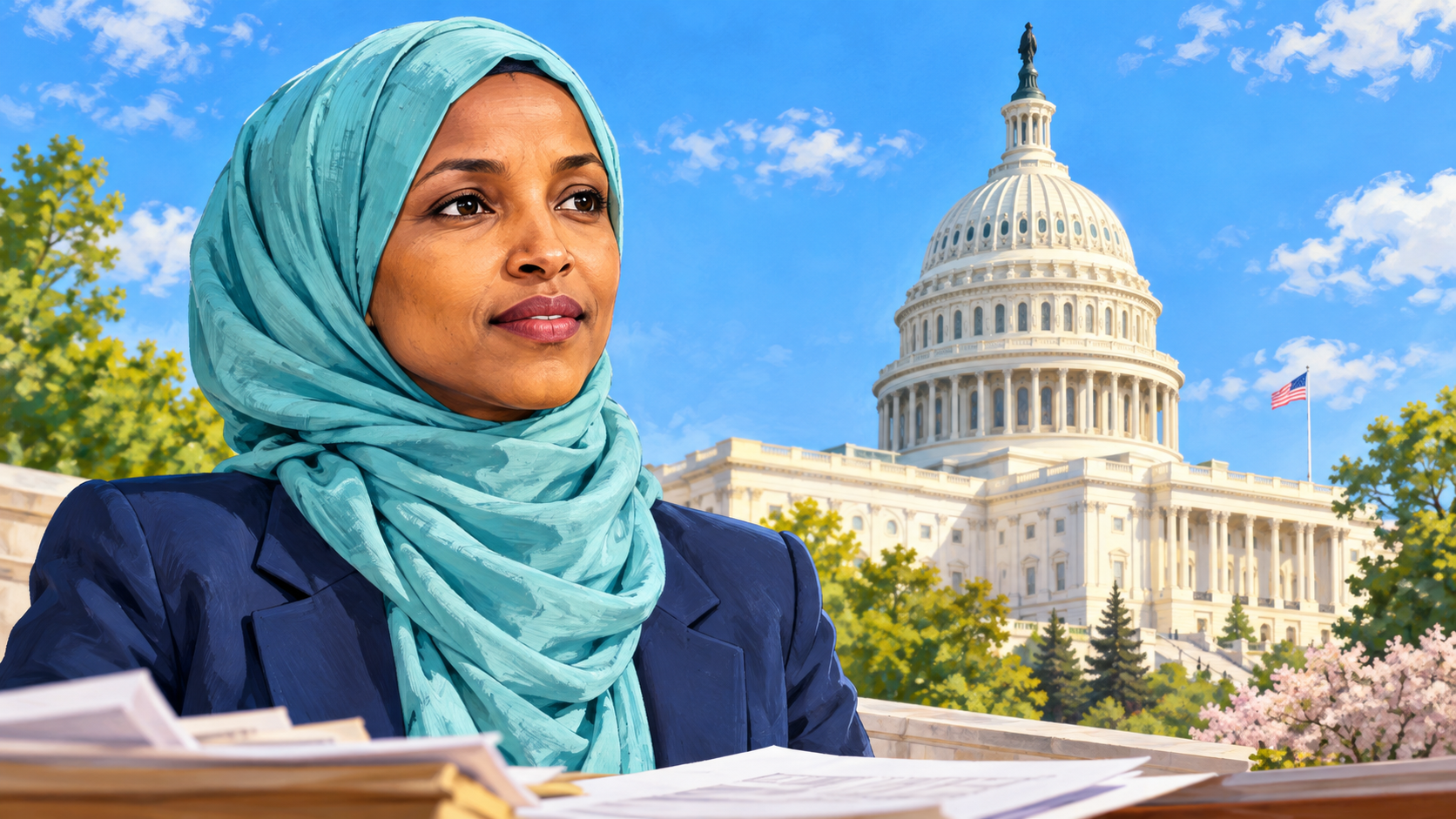
Editorial illustration of Ilhan Omar and Washington, D.C.; not a photograph of the search.
Sources: Reuters, Associated Press, and CBS News, October 12, 2026.