
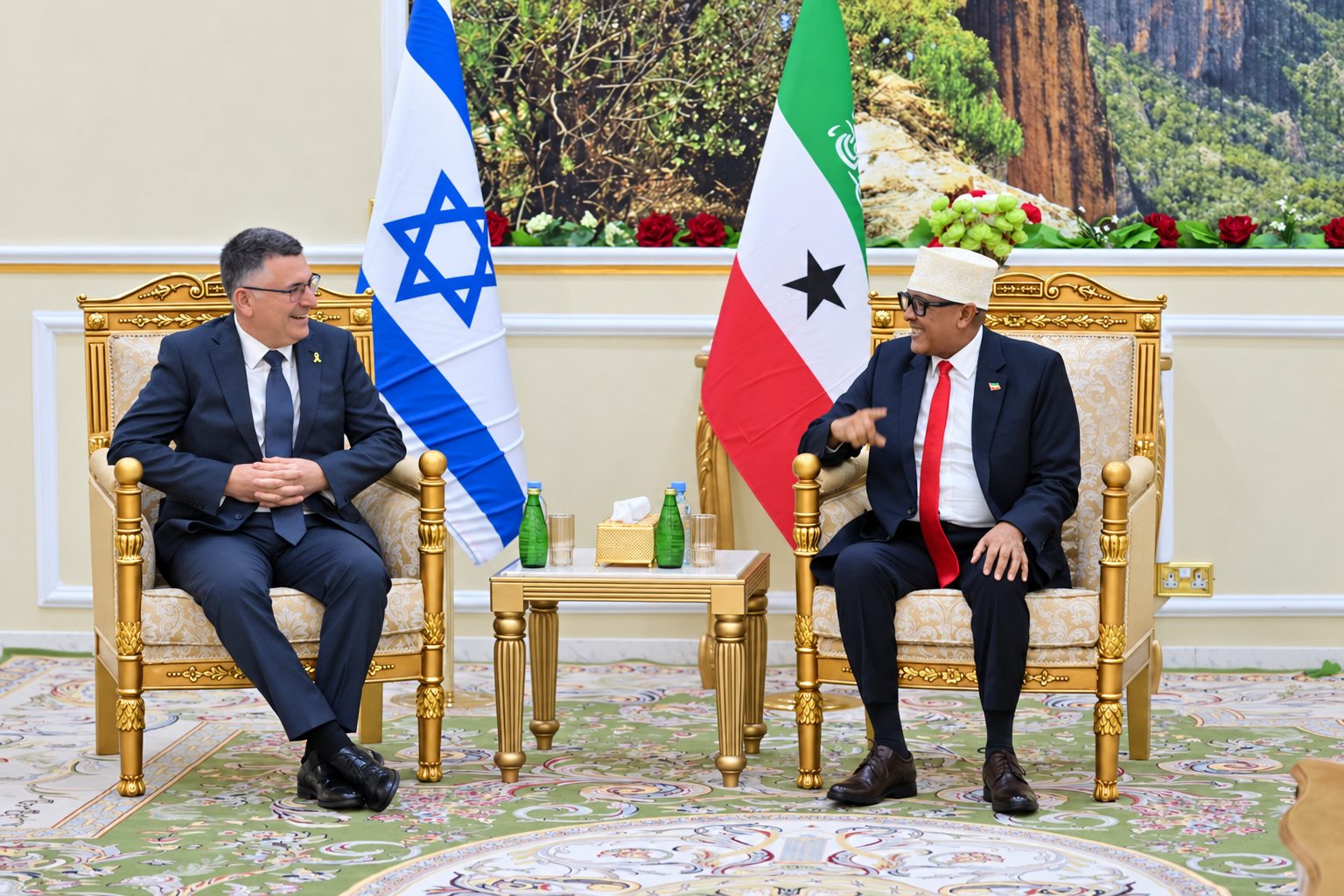
WASHINGTON, D.C. – Somaliland’s decades-long campaign for international recognition met a rigid diplomatic ceiling this month as President Abdirahman Mohamed Abdullahi “Ciro’s” high stakes tour of the United States concluded without securing the sovereign breakthrough his administration had sought.
Following his arrival in the United States on September 5, 2026, and the official commencement of his itinerary on September 8, 2026, the presidential delegation launched an aggressive lobbying push designed to capitalize on shifting dynamics in the Horn of Africa. However, the mission failed to achieve its ultimate objectives: formal diplomatic recognition from the United States or a top-level audience with President Donald Trump.
The Institutional Glass Ceiling
President Ciro’s delegation arrived in the American capital with high expectations, riding a wave of regional momentum following Israel’s groundbreaking decision to become the first United Nations member state to recognize Somaliland. Hargeisa hoped to leverage this alignment alongside its strategic positioning on the Gulf of Aden to force a major policy shift in Washington.
However, the administration’s core objective a meeting with President Trump or Secretary of State Marco Rubio—did not materialize. Instead, the delegation was funneled into sub-cabinet working groups, meeting with mid-level officials across the State Department, the Pentagon, the Treasury, and the National Security Council. While these sessions signaled a continuation of technical cooperation, they fell decisively short of the political validation Hargeisa intended to display to its domestic constituency and regional rivals.
Public Relations and Policy Setbacks
The limitations of the trip were further highlighted during President Ciro’s public appearance at the Hudson Institute. Aimed at pitching Somaliland as an indispensable democratic and security partner to conservative Washington policymakers, the forum instead triggered significant political backlash.
Critics and regional analysts argued that the president’s performance fell flat under scrutiny, failing to offer crisp, compelling answers regarding regional counter-terrorism, critical mineral supply chains, and the ongoing constitutional tensions within contested border regions like Sool and Sanaag. Rather than solidifying Somaliland’s image as a highly sophisticated de facto state, the public missteps provided political ammunition to unionist factions in Mogadishu, who framed the event as proof that Hargeisa is unready for the global stage.
The “One Somalia” Consensus
The outcome of the visit underscores the enduring nature of United States foreign policy toward the Horn of Africa. While a small, vocal faction of congressional Republicans led by allies like Senator Ted Cruz—continues to push for legislative frameworks that bypass Mogadishu, the broader Washington establishment remains firmly wedded to the “One Somalia” policy.
U.S. officials maintain that unilateral recognition risks fracturing the fragile security architecture of East Africa, potentially destabilizing the Federal Government of Somalia and complicating the multinational fight against al-Shabaab. For Washington, practical engagement on security and trade at the Berbera port does not, and will not, automatically equate to sovereign recognition.
Strategic Horizon for Hargeisa
While the Ciro administration has attempted to frame the trip as a success by pointing to expanded technical dialogues and potential increases in U.S. military training access, the lack of a formal political breakthrough represents a clear strategic failure.
With Israel standing alone in its recognition and the United States refusing to break ranks with the African Union’s strict border doctrines, Somaliland remains trapped in a geopolitical waiting room governing itself with de facto efficiency, but unable to break the de jure lock held by Mogadishu.