
← Somali Heritage Museum · All collections
DRESS & ADORNMENT
White Cloth, Beads and Shields: Somali Men’s Dress
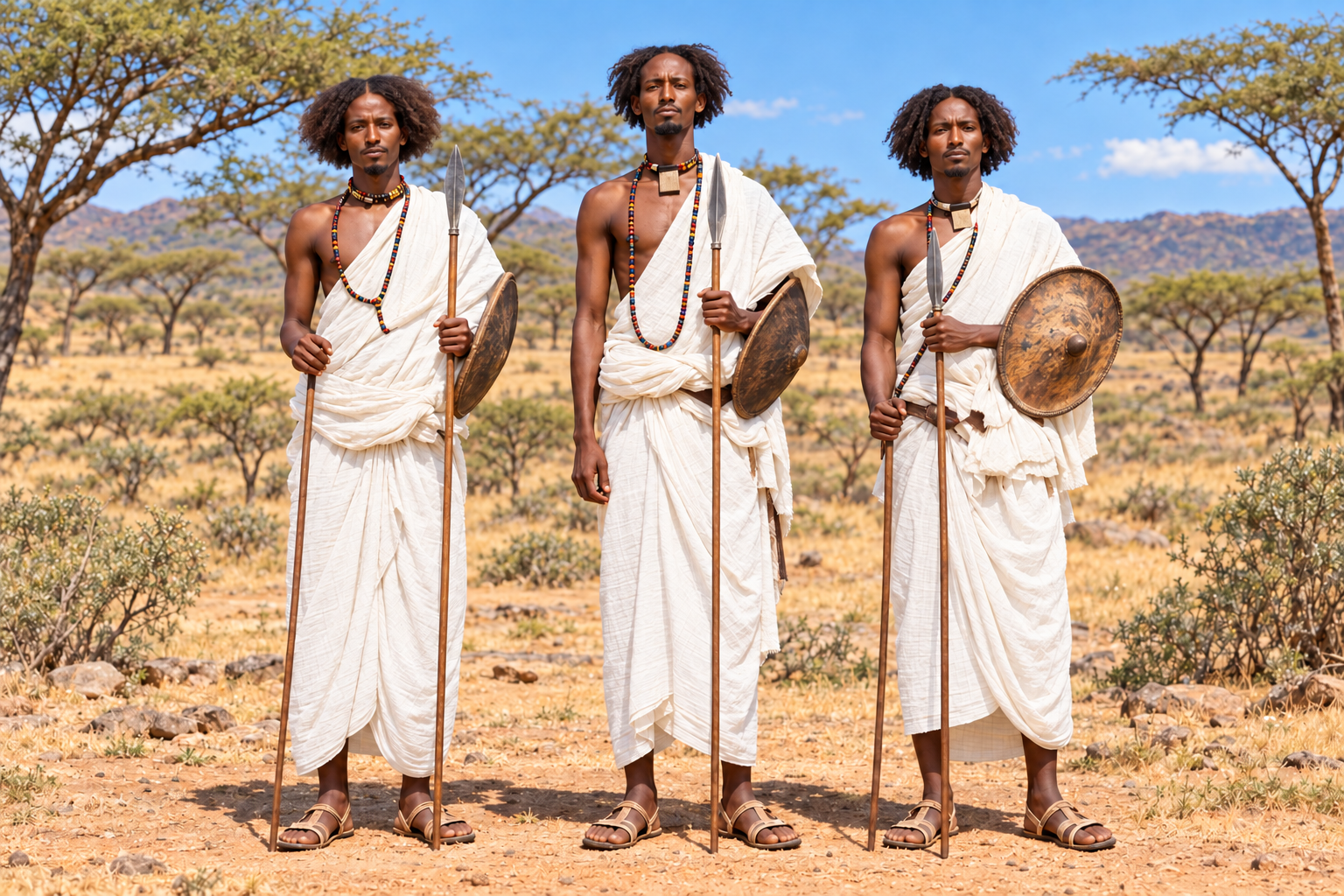
Three men stand against an open, sunlit landscape, wearing white cloth draped over one shoulder and wrapped around the waist. Long beaded necklaces and neck ornaments add colour to the pale fabric, while leather sandals complete each ensemble. Upright spears and rounded shields bring attention to the objects carried alongside the clothing, inviting a closer look at their shapes, materials, and craftsmanship. The image is an artistic interpretation inspired by a historical photograph, with newly imagined faces and surroundings; it does not identify particular people, a clan, or a documented occasion.
DRESS & ADORNMENT
Red Dress and Adornment: Colour, Cloth and Identity
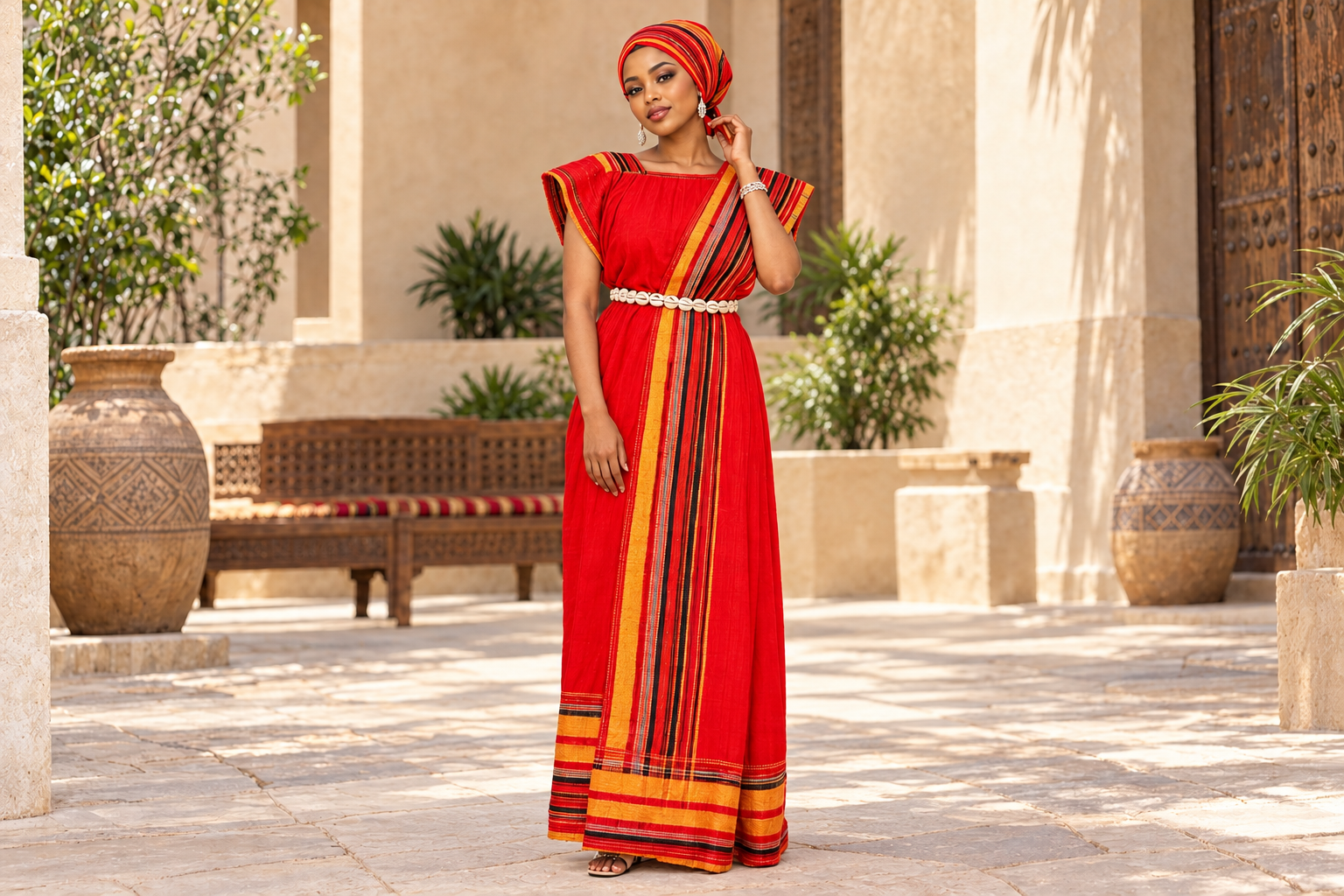
A vivid red ensemble brings together a flowing full-length dress, a matching striped headwrap, and a white shell belt. Gold, orange, and black bands run down the fabric and around the hem, drawing the eye toward the drape and movement of the cloth. Silver-toned earrings and a bracelet complete the composition, while the warm courtyard setting gives the colours a bright, sunlit backdrop. This artistic interpretation celebrates Somali-inspired dress and adornment; it does not document a particular historical garment, person, or occasion.
DRESS & ADORNMENT
Benaadir Cloth: The Art Behind the Fabric
From threads on a loom to clothing that carries identity.
- Name / subject
- Benaadir cloth; garment names include futa, go, and guntino
- Place / community
- Mogadishu and the Benaadir coastal region
Reading the image
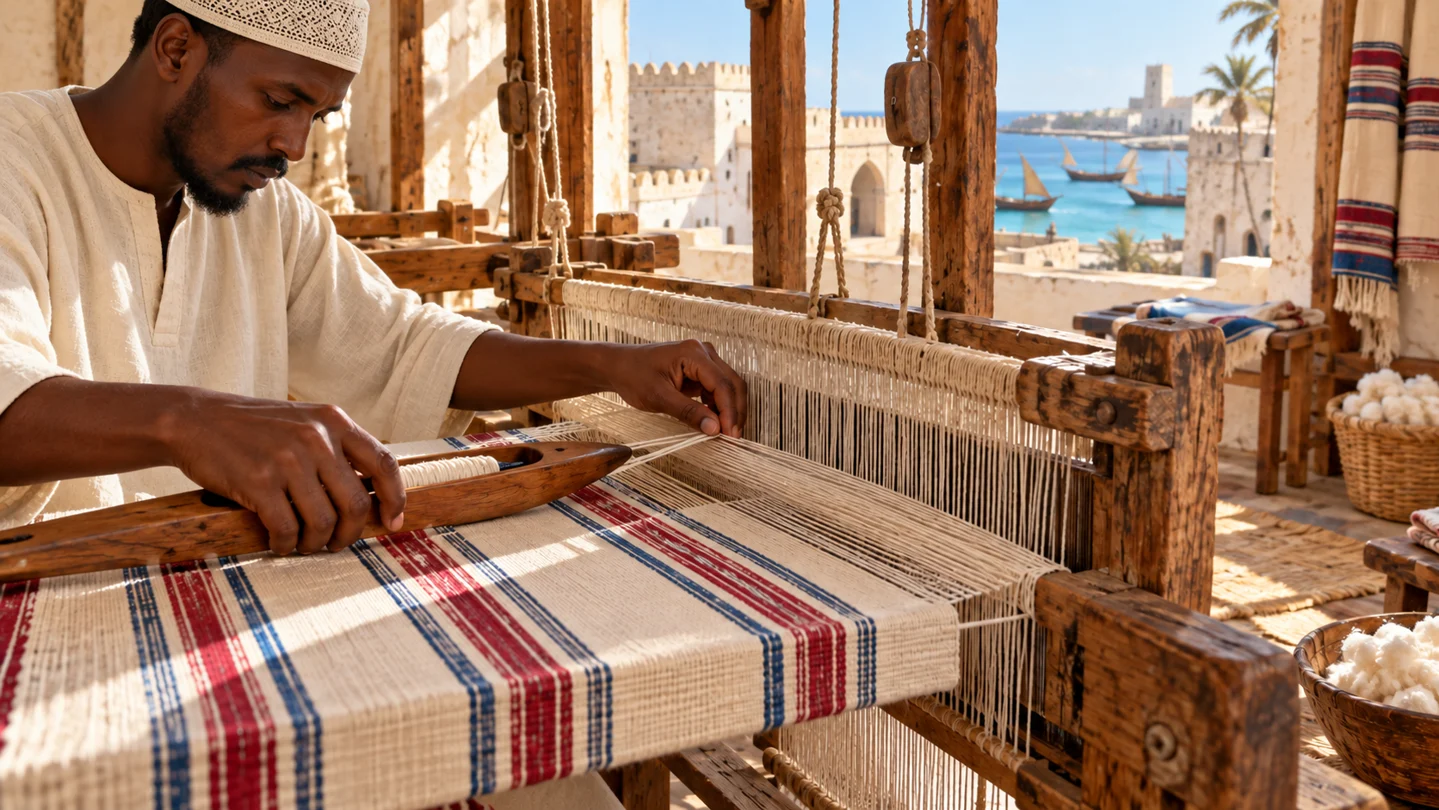
The image brings us close to the artisan’s hands rather than presenting cloth as a finished product alone. Threads cross a wooden loom while a striped textile takes shape. This interpretive workshop scene is intended to make the process visible; the artisan, pattern, colours, and workshop are imagined. They do not reproduce a documented person or a particular historical textile.
A tradition rooted on the coast
The Smithsonian National Museum of African Art identifies Benaadir cloth as cotton yardage commercially woven by men in Mogadishu and the surrounding coastal region. Its collection records link a material used in clothing to a specific geography of production. That connection matters: dress can tell us about the places where people worked, the skills they practised, and the goods that circulated through a community.
From yardage to garments
In the Smithsonian’s descriptions, lengths of this cloth are used for the men’s wrapped skirt called a futa, a shorter shawl-like covering called a go, and a woman’s wrapper called a guntino. The same broad textile tradition can therefore be encountered through several forms of dress. The cloth is not the complete garment story by itself; cutting, wrapping, draping, and the wearer’s choices also shape how it appears.
Looking closely at construction
One documented wrapper, accession 72-8-6, is described as cotton plain weave made in two handloom pieces joined through their warp ends. Another wrapper, accession 2020-25-2, has broad alternating purple and white bands. These records offer concrete examples of construction and colour while showing why a single illustration cannot stand for the full range of Benaadir textiles. The stripe pattern in our image should be read as a visual interpretation, not a catalogue identification.
The maker behind the garment
A loom invites us to think about time and repetition. To look at fabric only as colour is to miss the crossing threads and repeated decisions that make a surface possible. In this gallery, attention rests on the maker as well as the wearer. The artisan’s hands in the image offer a way into that story, while documented collection records anchor the discussion in surviving textiles.
What this cloth helps us remember
Benaadir cloth connects the museum’s dress collection with its coastal-history collection. A port city is also a place of workshops, households, and local production. When you look again, trace one visible stripe and then look for the threads within it. The movement from the whole pattern to its smallest elements makes craftsmanship easier to see, and gives the finished cloth a human scale.
← Back to all collections