
← Somali Heritage Museum · All collections
OBJECTS & EVERYDAY LIFE
Koor: The Somali Wooden Camel Bell
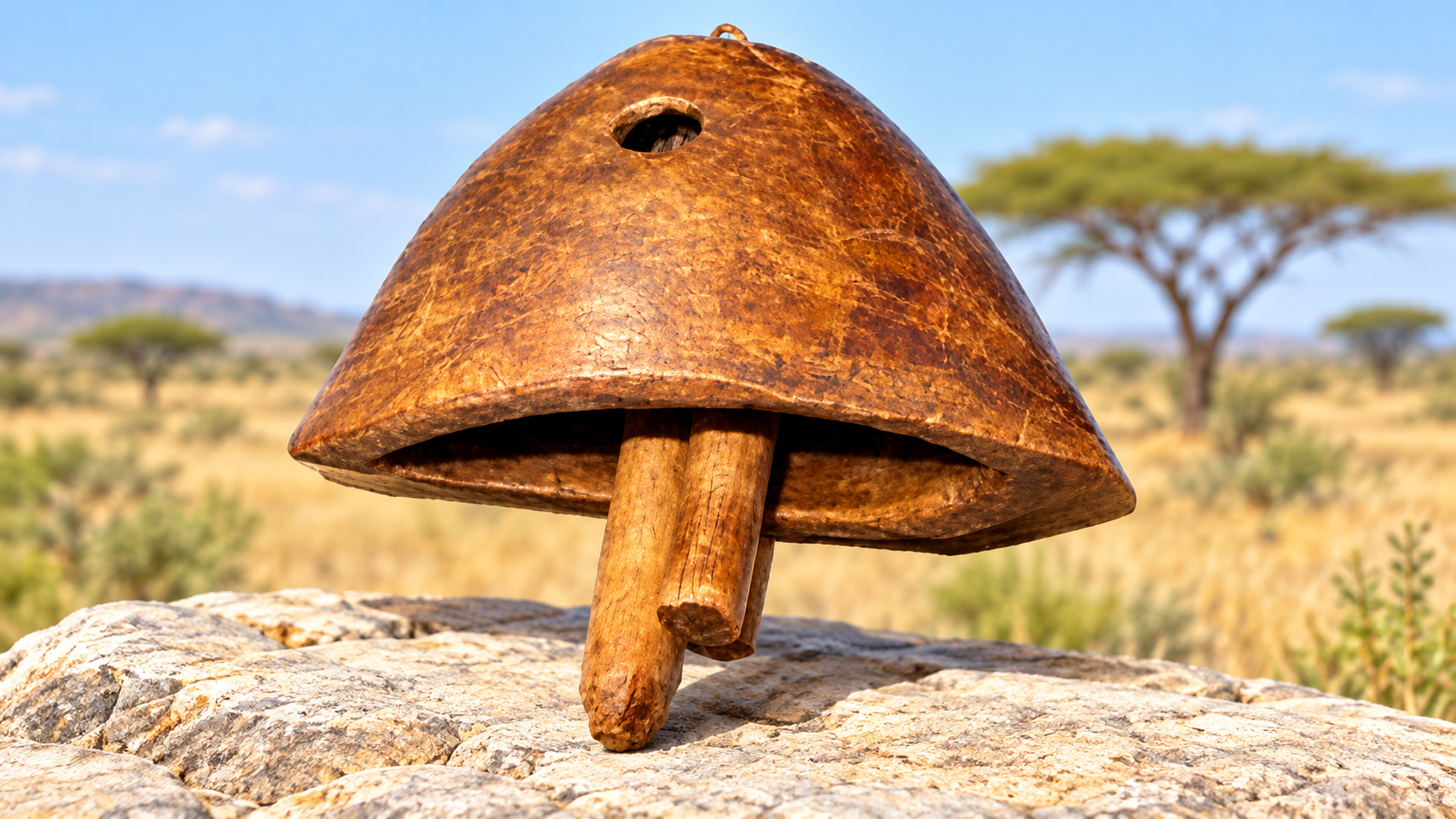
The Koor is a traditional Somali wooden bell worn around a camel’s neck on a strap. As the animal moves, the bell makes a sound that helps herders locate it among bushes and thick vegetation. Its purpose connects sound with the practical work of caring for animals across a landscape.
This illustration highlights the bell’s broad, hollow wooden body and the two wooden clappers projecting from its opening. A suspension hole near the top shows where a cord or strap can pass through. The Smithsonian documents a Somali camel bell with a triangular wooden form, two wooden clappers, and a plant-fiber rope threaded near its top. That example provides a useful comparison, without establishing the age or maker of the bell pictured here.
Warm brown coloring and an imagined acacia landscape bring the object into focus. The image was created from a supplied photograph and is an artistic interpretation rather than a record of a particular grazing place. Its maker, date, wood species, and original dimensions have not been established.
OBJECTS & EVERYDAY LIFE
Loox: The Somali Qur’an Learning Board
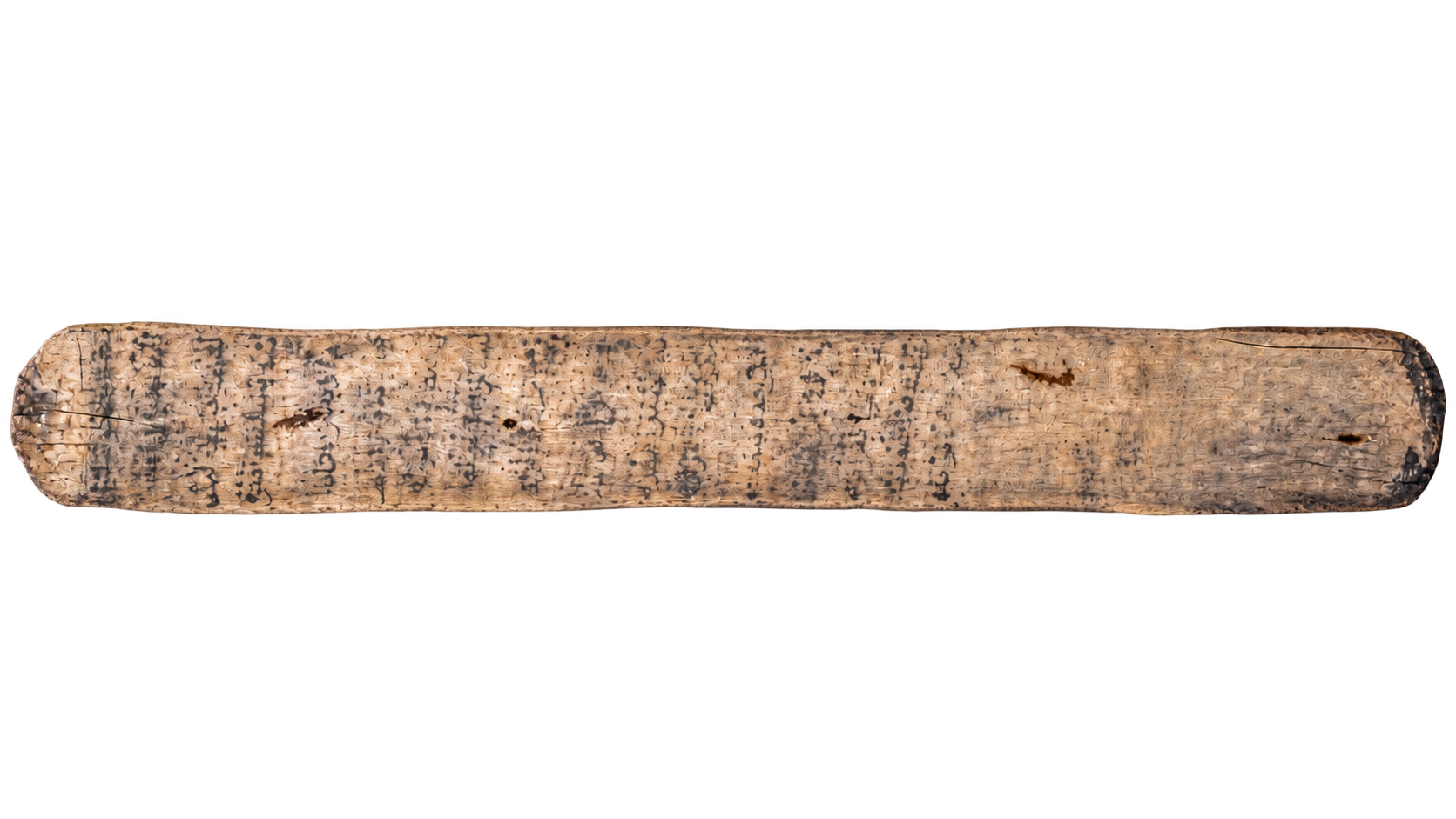
The Loox is a traditional Somali wooden learning board associated with Qur’anic education. Carved from wood, it provided a reusable surface on which lessons could be written and studied. Once a lesson had been memorized, the writing was washed away to prepare the board for the next lesson. This cycle of writing, memorizing, and washing made the board a practical companion to learning.
This illustration presents a single long, narrow board with worn edges, pale brown wood, and faded handwritten markings. It has been separated from the children and setting in the supplied photograph so visitors can focus on the object itself. Its horizontal arrangement is a display choice for this exhibit. The board’s maker, age, original dimensions, and the exact passage represented by its markings have not been established.
As an everyday educational object, the Loox connects material heritage with the act of passing knowledge between generations. Its importance lies in both its wooden form and the repeated lessons associated with its use. It invites visitors to remember the relationship between the learner, the teacher, and a surface prepared for another lesson.
OBJECTS & EVERYDAY LIFE
Dhiil & Haan: Somali Milk Vessels
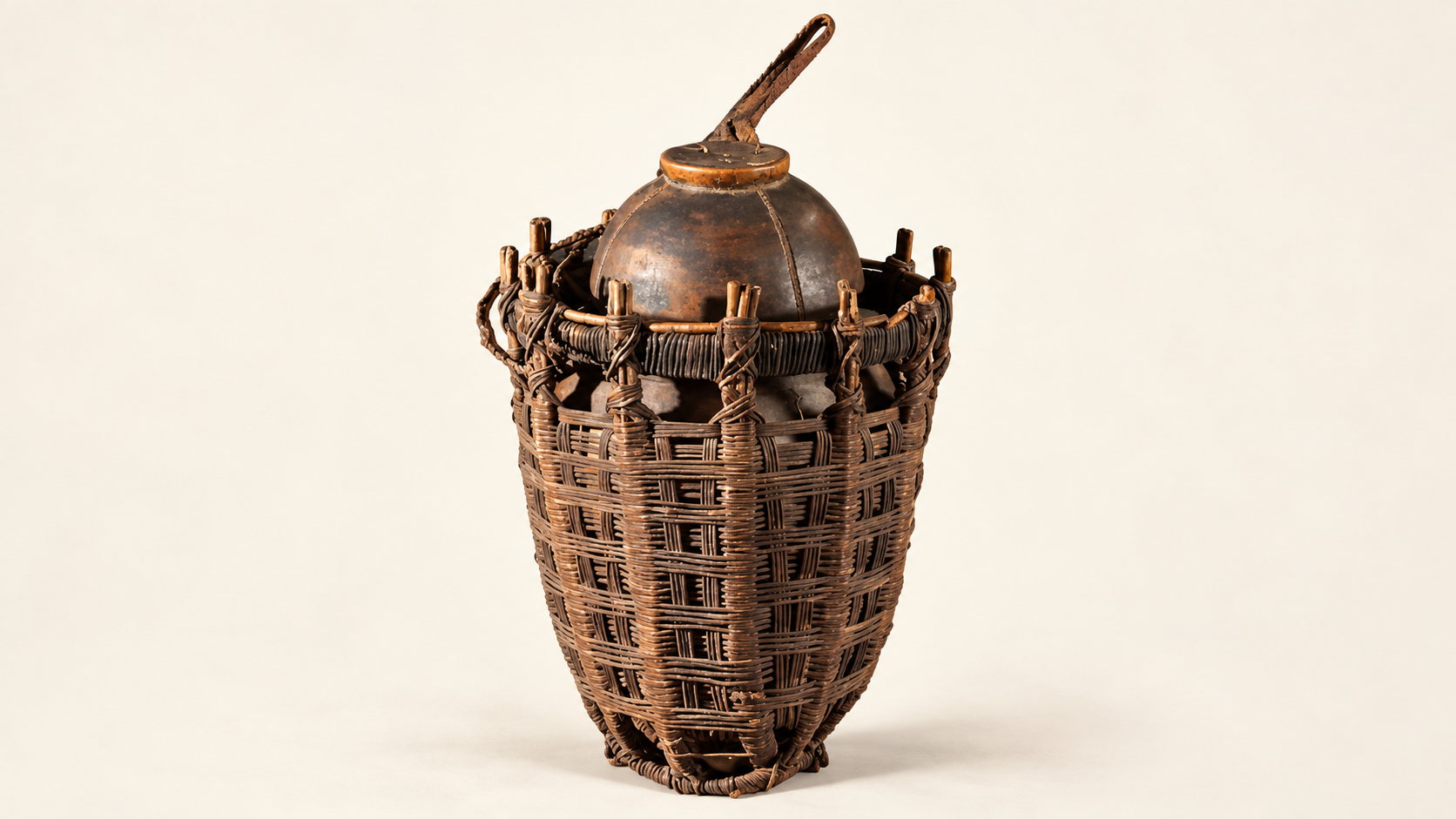
Milk vessels hold an important place in Somali pastoral heritage, connecting everyday nourishment with the skill of making containers that can be carried and kept. Dhiil is a name used for traditional milk containers, while the reference supplied for this illustration identifies its vessel as a Haan. These names should not be treated as proof that all vessels share the same size, material, or construction. Museum collections preserve different forms, including wooden milk containers and woven vessels.
The illustration draws attention to a rounded vessel with a fitted lid, a long leather strap, and a closely worked outer basket. The protective framework, known as a saab in accounts of Somali handicrafts, surrounds the vessel with upright supports, woven bands, and bound joints. Its open structure makes the relationship between the inner container and its carrying support easy to see. Together, these details invite a closer look at the practical craftsmanship behind a familiar household object.
Created from the supplied photograph, this image is an artistic interpretation of the vessel’s appearance. The original maker, age, dimensions, and precise materials have not been established for this example. Its story is presented here as part of Somali everyday life and material culture.
OBJECTS & EVERYDAY LIFE
Fandhaal: The Somali Wooden Eating Spoon
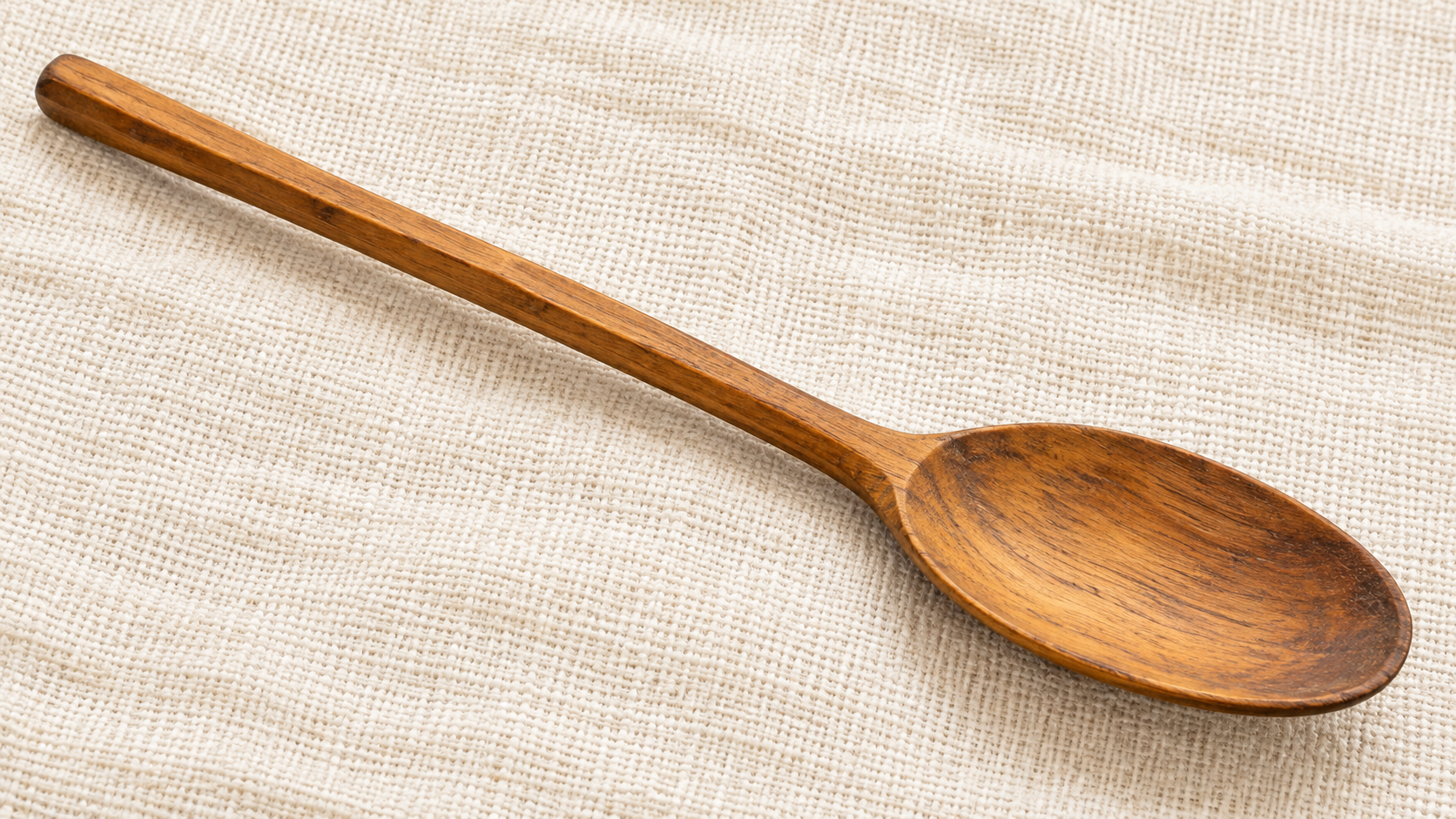
The Fandhaal is a traditional Somali wooden spoon used primarily for eating. It has a long handle and a flat eating surface, made from durable wood. Its simple form places usefulness at the centre of its design. As a museum subject, it draws attention to the ordinary utensils through which daily life can be remembered.
In this illustration, warm wood grain stands out against a light woven cloth. The shallow bowl and extended handle invite visitors to look closely at the relationship between material, shape, and use. The image is an artistic interpretation rather than a photograph of a documented museum specimen. No particular maker, date, wood species, or place of manufacture is assigned to the illustrated spoon.
OBJECTS & EVERYDAY LIFE
Xeedho: A Wedding Tradition Shared by Families
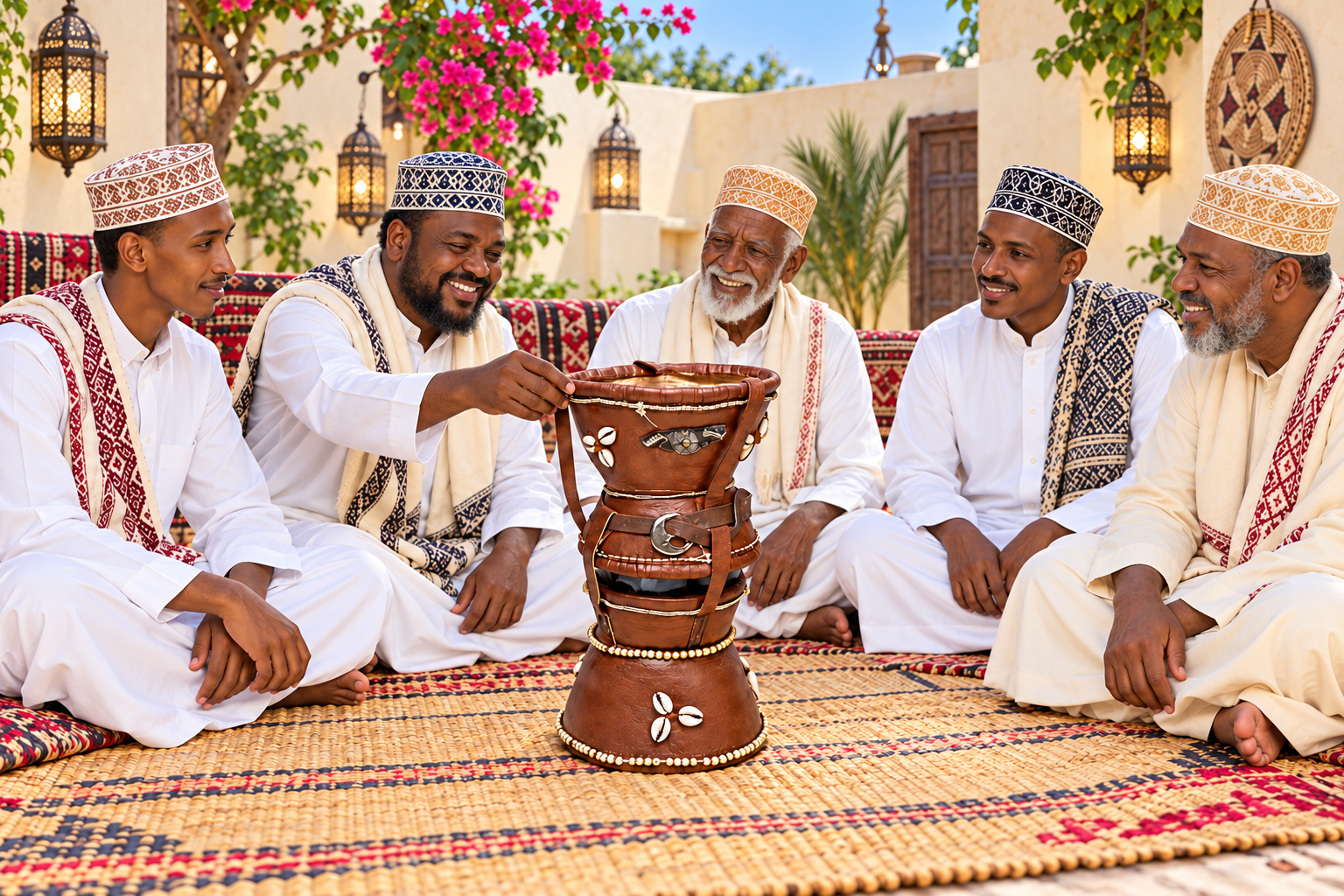
The Xeedho is a wood-and-leather container decorated by the bride’s family with sea shells and beads, with muqmad meat placed inside. In the wedding tradition described here, members of the groom’s family gather on the evening of the seventh day after the wedding for the opening of the Xeedho. Its decorated surface and carefully secured straps become the focus of a shared family occasion. This illustration imagines Somali men gathered around a brown Xeedho, bringing the container and the ceremony into one scene.
OBJECTS & EVERYDAY LIFE
Haduub: A Vessel for Milking Camels
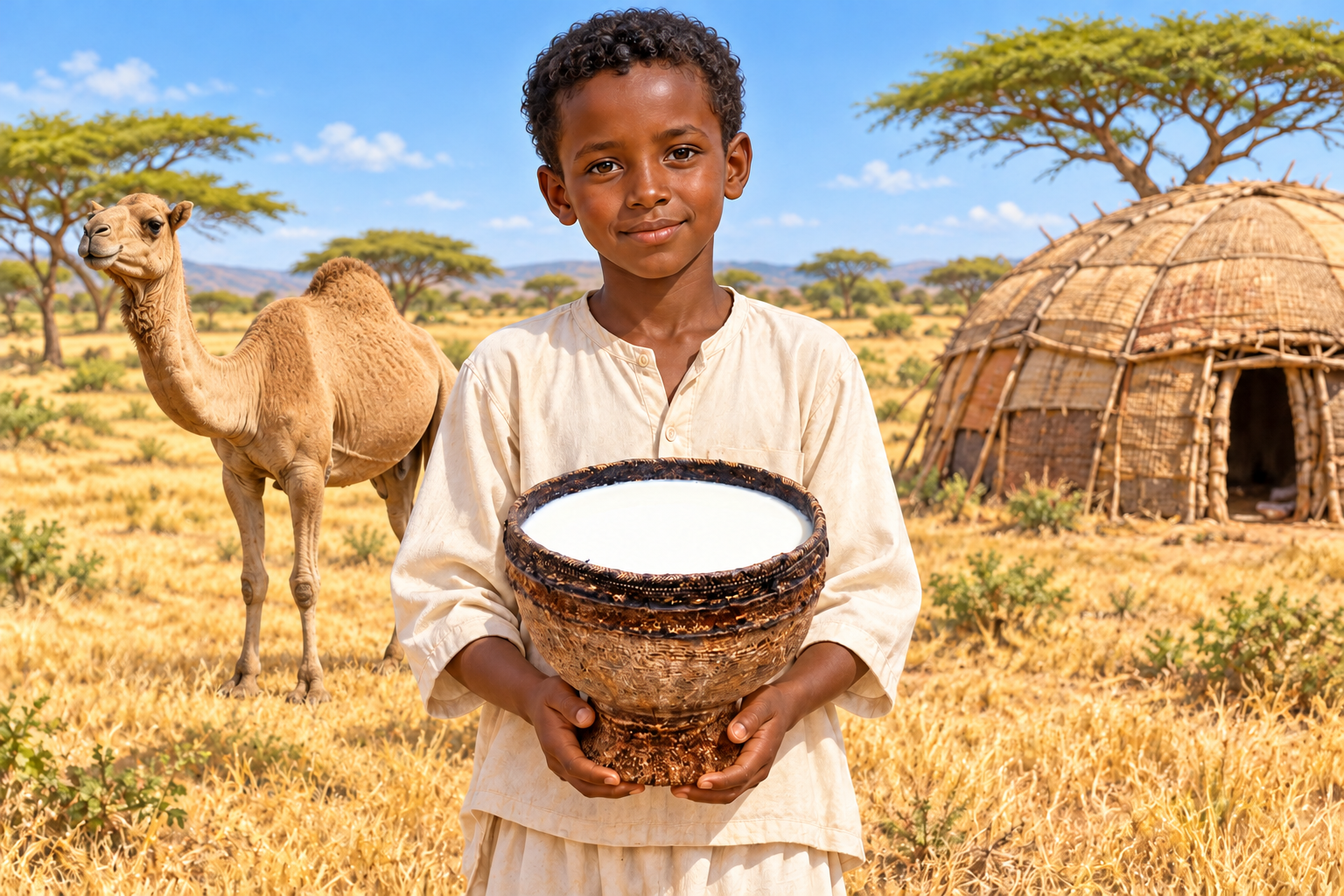
The Haduub is a traditional vessel used for milking camels. In this illustration, a young Somali boy holds one filled with milk, its broad opening, dark textured surface, and raised base clearly visible. A camel and a rounded nomadic home place the vessel within a pastoral setting, connecting an everyday object with the animals and households around it. Created from a supplied vessel photograph, this artistic interpretation uses an imagined child and landscape to bring the object’s use into view.
OBJECTS & EVERYDAY LIFE
Barkin: The Somali Wooden Headrest
A small object with a story of rest, skill, and pastoral life.
- Name / subject
- Barkin; also recorded as barshin
- Place / community
- Somali communities; documented examples from Somalia and eastern Kenya
Reading the image
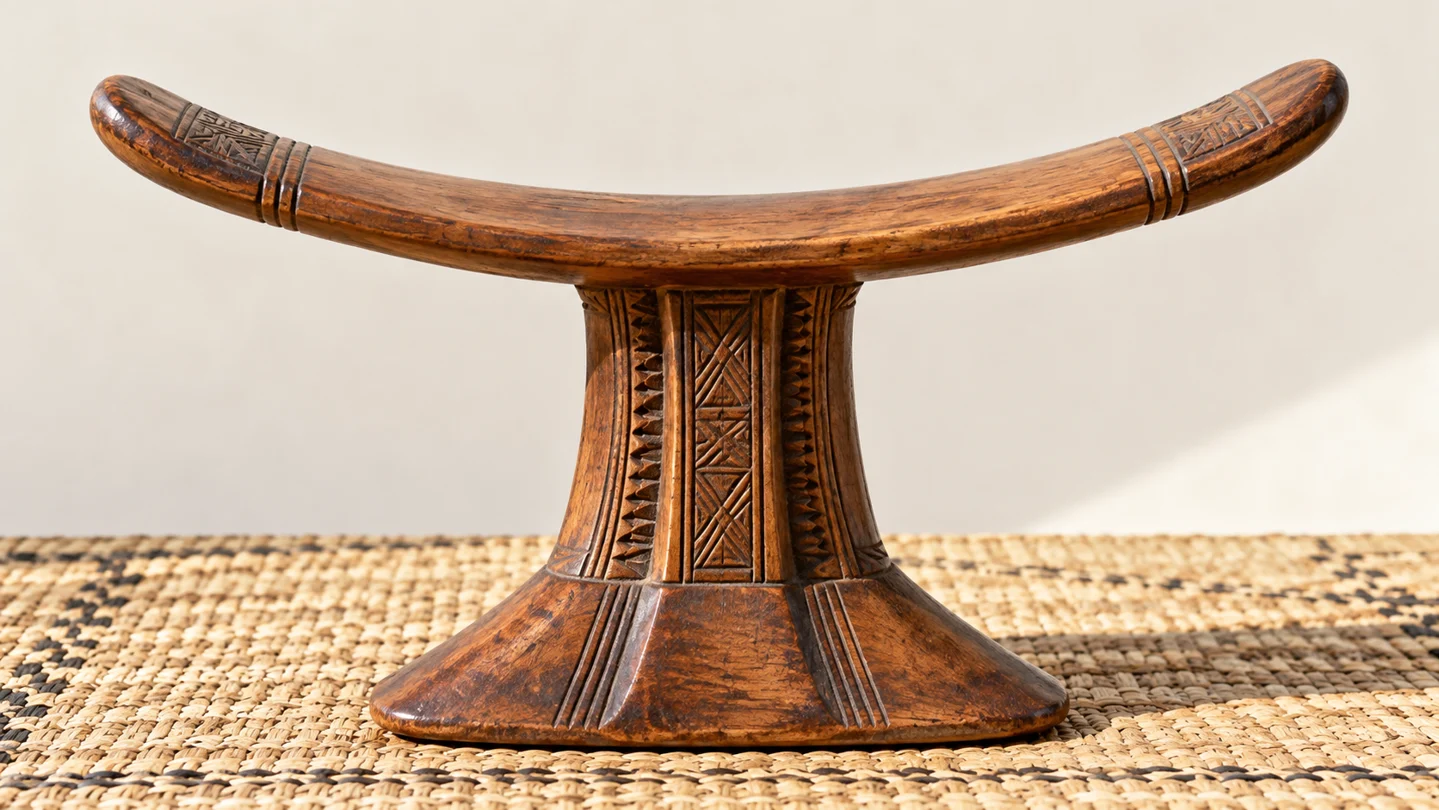
The illustration places a wooden headrest at the centre of attention. Its curved upper surface, narrow support, and broader foot invite us to follow the relationship between the body and the object. The warm wood and woven mat draw attention to materials rather than decoration alone. This is an interpretive illustration of a type of object, not a photograph of an accessioned artefact.
An object made for rest
Known as barkin or barshin in museum records, Somali wooden headrests support the head during reclining or sleep. The Metropolitan Museum of Art documents a Somali example dated to the nineteenth through mid-twentieth century. Its record describes a crescent-shaped top, two flattened supports, and a small round or oval base. These details belong to that particular object and provide a useful comparison with the simplified form pictured here.
The knowledge in the wood
The Met explains that examples were carved from a single piece of fine-grained wood, with woods identified in its account as hagar or yucub. A carver had to preserve enough material for strength while shaping the support and base. Incised designs could turn the surface into an additional field of expression. The Smithsonian records different arrangements of supports and decoration, reminding us that Somali headrests form a varied tradition rather than a single standard design.
Rest and watchfulness
The Lam Museum at Wake Forest University places this kind of headrest among Somali and Aweer, also known as Boni, communities in southern Somalia and eastern Kenya. Both its account and the Met discuss smaller bases on some men’s examples and more stable forms associated with women. Scholars have interpreted the less stable forms in relation to watchfulness when guarding animals. That interpretation is part of the object’s curatorial history; it should not be confused with proof of what every owner intended.
Why it belongs in the museum
A headrest brings the history of craftsmanship into an everyday moment. Instead of beginning with a ruler or a battle, we begin with someone making a useful object and another person carrying, keeping, and using it. Its scale encourages close looking: the curve of a support or the cut of a line can hold evidence of a maker’s decisions. The people behind many surviving examples remain unnamed, but their work deserves attention.
Look again
Compare the upper curve with the base. Where would weight fall, and what would keep the object upright? Follow the visible grain and imagine the planning required before carving began. These questions help turn a familiar-looking wooden object into a record of practical knowledge.
← Back to all collections