
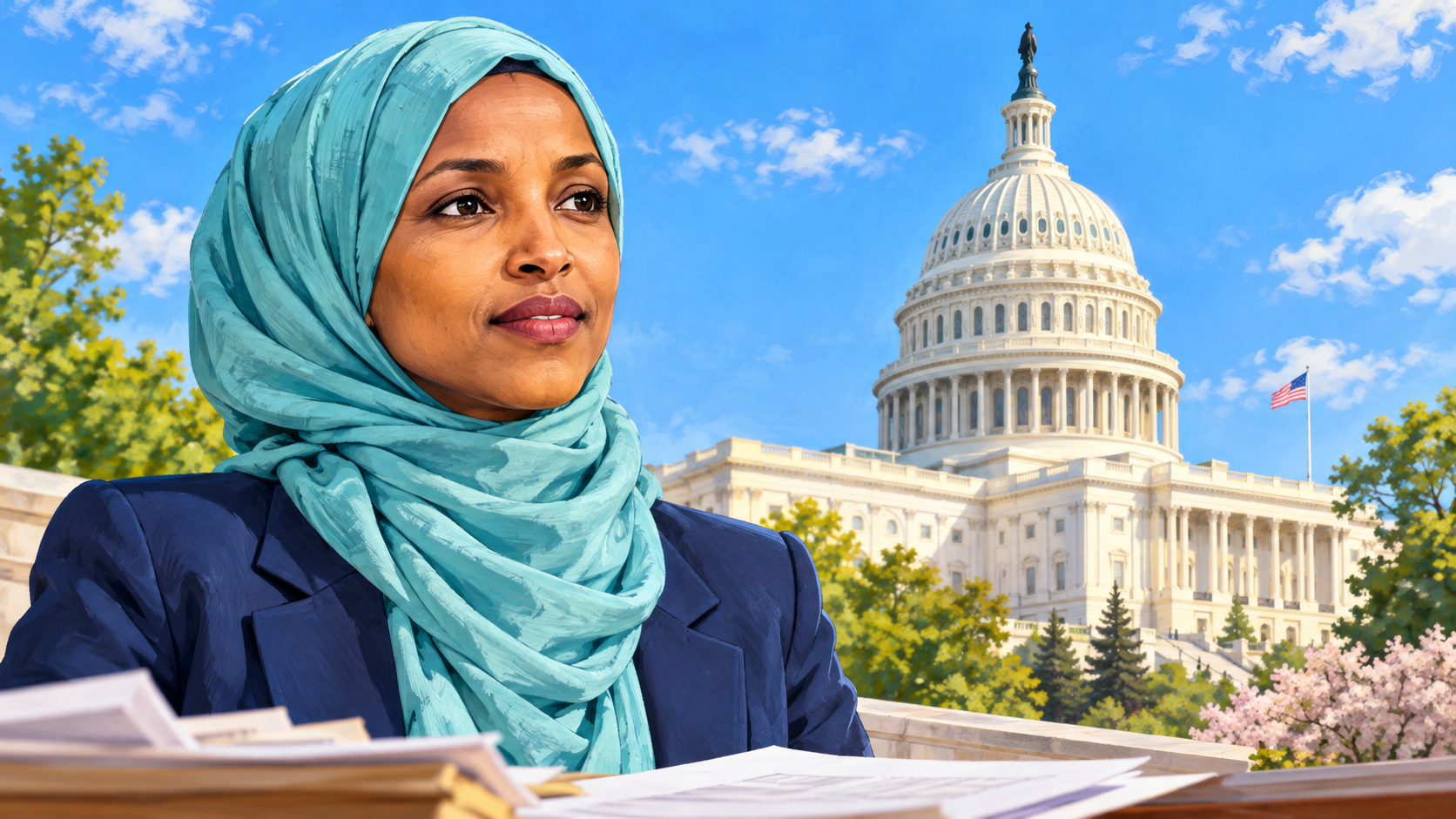
In the arena of modern American media, few political figures draw as much coordinated scrutiny as Minnesota Representative Ilhan Omar. As a prominent progressive, a practicing Muslim, and a former refugee, Omar has long been a lightning rod for intense partisan debate.
However, a closer look at recent media trends reveals a sophisticated framing strategy that goes far beyond standard talking points. Rather than relying solely on domestic political friction, certain media outlets have strategically elevated voices from the autonomous region of Somaliland to systematically undermine her credibility.
By pulling a complex Horn of Africa conflict into the American mainstream, these platforms have found an effective way to bypass traditional political defenses and mount a deeply damaging critique of her standing.
Bypassing the Shield of Bias Accusations
Aggressive media campaigns against minority politicians carry an inherent risk for the networks broadcasting them. When traditional political commentators heavily target a Black, Muslim, immigrant woman, the network often faces immediate accusations of xenophobia, racism, or Islamophobia.
To insulate themselves from this blowback, media platforms employ a clever counter-strategy: they change the identity of the critic.
By providing a microphone to commentators who share Omar’s broad geographic origins, Islamic faith, and East African heritage, the media successfully reframes a hostile political attack as an authentic, internal community debate. This tactical positioning allows platforms to deliver devastating critiques of Omar’s positions while maintaining a shield of plausible deniability against charges of prejudice.
Exploiting the Geopolitical Fracture
The core of this media strategy relies on the painful, unresolved history of the Horn of Africa. Somaliland declared independence from Somalia in 1991, establishing its own stable government and democratic systems, though it still lacks official international recognition. Rep. Omar, conversely, has consistently championed a “One Somalia” policy, firmly aligning herself with the central federal government in Mogadishu and opposing any regional deals such as the recent maritime agreement with Ethiopia that validate Somaliland’s sovereignty.
Media outlets strategically exploit this geopolitical fault line. By featuring Somaliland activists who view Omar’s foreign policy as an existential threat to their homeland, the media constructs a highly specific narrative. They portray her not as an objective American lawmaker, but as a partisan actor taking sides in a foreign clan conflict. This shifting of perspective is designed to make her look less like a public servant representing Minneapolis and more like an agent for Mogadishu’s political interests.
The Contrast of Stability vs. Chaos
Another powerful tactic is using Somaliland commentators to highlight a stark contrast in governance. International observers frequently cite Somaliland as a relative success story of democratic transitions and local security in a highly volatile region. In contrast, the central government of Somalia has spent decades struggling against systemic corruption, instability, and militant threats.
When media networks host Somaliland voices, the underlying message to the American audience is clear: they are showcasing a peace-seeking, democratic population that feels marginalized by Omar’s policy stances. This contrast is used to subtly question Omar’s core political values. By aligning her with a struggling central state over a seemingly functional, democratic breakaway region, the media seeks to quietly chip away at her progressive credentials.
Translating Foreign Policy into Domestic Damage
Ultimately, the media’s sudden interest in Somaliland voices is not about educating the American public on East African history. It is about domestic political erosion.
By repeatedly tying Omar to complex, emotionally charged foreign disputes, media platforms build a broader argument for her voters back home: that she is overly consumed by international politics at the expense of her actual constituents. When paired with intense social media scrutiny and local community scandals, the narrative becomes a powerful tool.
By transforming a foreign historical grievance into an authoritative domestic debate, media platforms have found an effective blueprint to challenge Representative Omar’s policy, patriotism, and political future.