THE WIDER CHRONICLE | COMMUNITY SPOTLIGHT
October 21, 2026
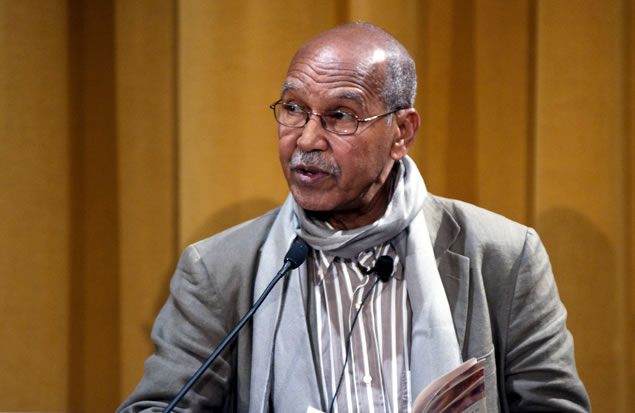
For Nuruddin Farah, a story can begin with a family and open onto the life of an entire country. His novels bring readers close to people negotiating love, duty, displacement, and the pressure of authority. Across decades of writing, he has made Somali lives part of a wider conversation about freedom and belonging.
From Baidoa to the world
Farah was born in Baidoa in 1945 and grew up in a multilingual environment. His mother was a traditional storyteller, and his father worked as an interpreter. Those early encounters with language and storytelling helped shape a writer whose books would cross borders and reach readers in many languages.
His first novel, From a Crooked Rib, appeared in 1970. It follows a young woman trying to escape an arranged marriage and claim a measure of control over her own life. By putting her choices at the center of the story, Farah challenged the authority exercised over women within the family and society.
Writing about power and belonging
Farah’s fiction asks how people preserve their independence when families, communities, and political systems demand obedience. His characters face difficult choices rather than easy answers. Through their lives, he explores how public power enters private relationships and how individuals resist it.
Among his best-known works are Maps, Gifts, and Secrets, which form the Blood in the Sun trilogy. These novels explore identity, kinship, and belonging against the pressures of violence and political upheaval. Somalia remains central to his literary imagination, even as his work speaks to experiences familiar far beyond it.
A lasting literary contribution
In 1998, Farah received the Neustadt International Prize for Literature, a major recognition of his contribution to world literature. His books have been translated into more than twenty languages. That international reach has introduced many readers to Somali experiences through individual voices, intimate relationships, and complex moral choices.
Farah’s importance lies in the space his writing gives to people thinking for themselves. His fiction invites readers to look beyond headlines and see the inner lives of those shaped by history. This week, The Wider Chronicle spotlights a writer who has helped carry Somali stories into world literature.
Biographical references: Neustadt Prizes; Brown University Literary Arts.