
← Somali Heritage Museum · All collections
FEATURED EXHIBIT · PEOPLE & LEADERSHIP
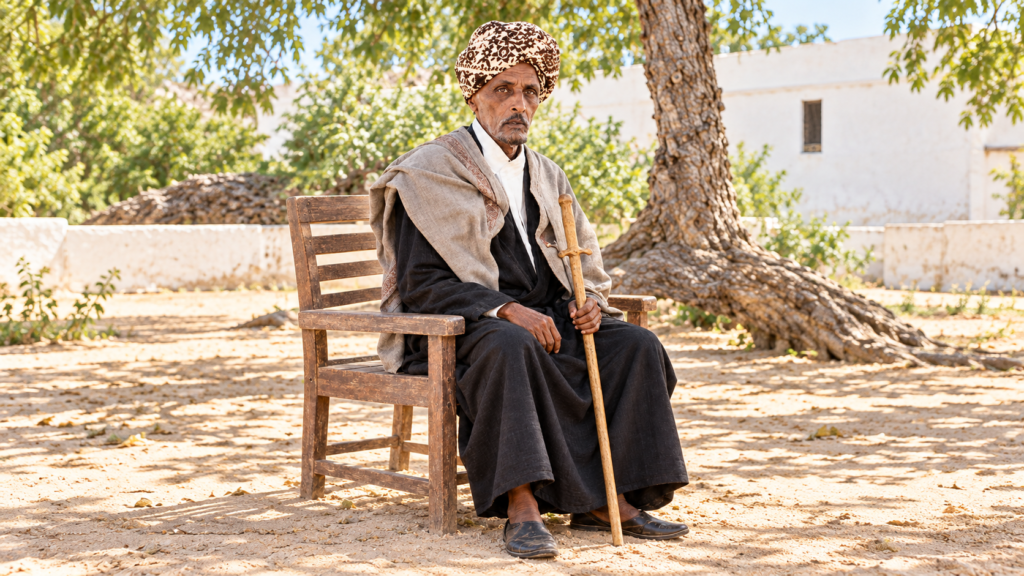
Select the portrait to open a larger image.
- Exhibit
- SHM-001 · Portrait
- Somali name
- Maxamuud Cali Shire
- Collection
- People & Leadership
- Image type
- Interpretive color reconstruction
Sultan Mohamoud Ali Shire
A portrait opens a window onto leadership, colonial power, exile, and return. Explore the story of the Warsangali ruler whose journey connected northern Somali territory with the Seychelles and the wider Indian Ocean.
Reconstructed color portrait based on a historical photograph. Colors and expanded framing are interpretive.
Read the exhibit story →PORTRAIT & BIOGRAPHY · PEOPLE & LEADERSHIP
Sayyid Mohamed Abdulle Hassan
Sayid Maxamed Cabdulle Xasan · Religious leader, poet, and leader of the Dervish movement
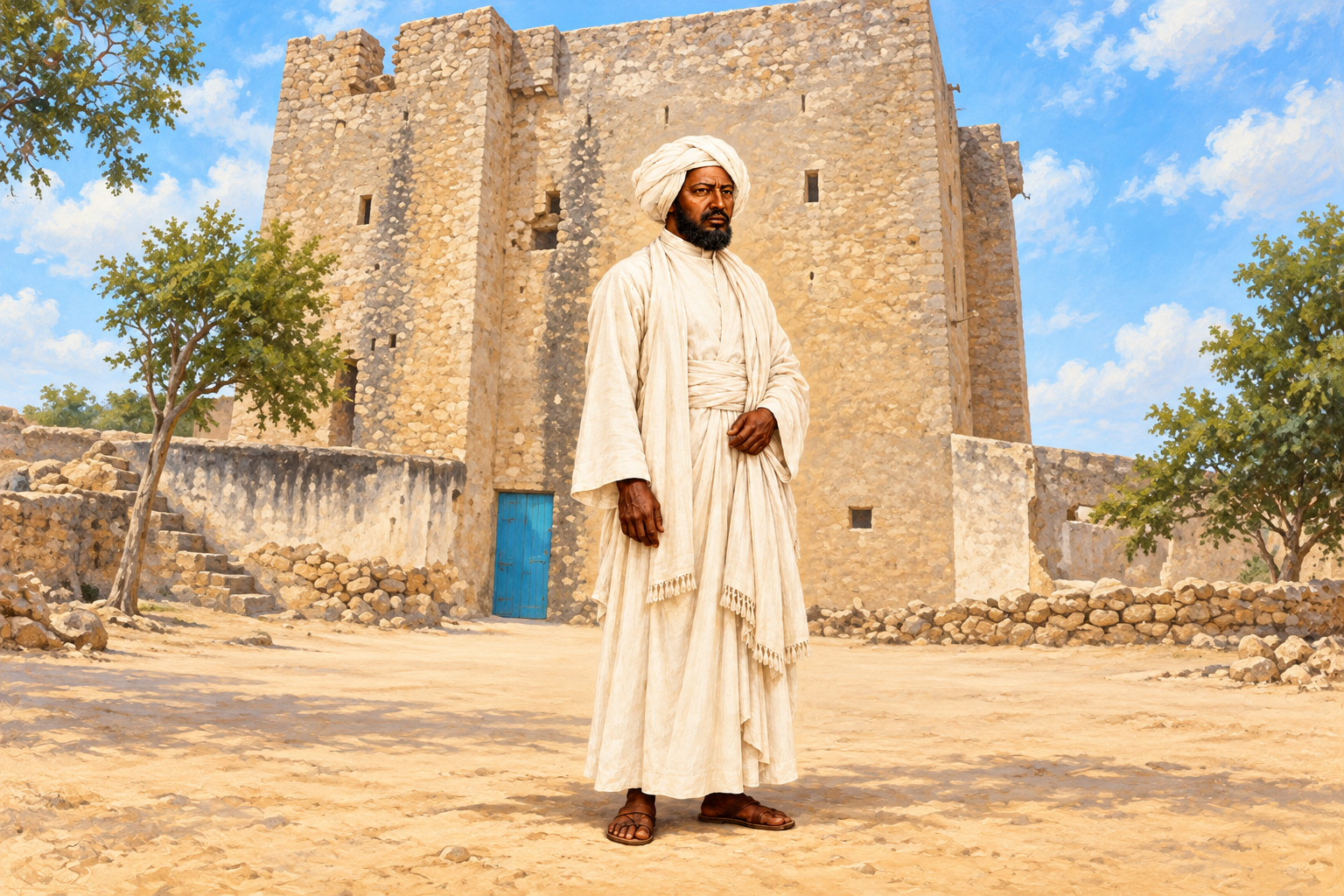
Artistic historical reconstruction. The full-body pose, clothing details, colors, and fort setting are interpretive, not a verified photographic record.
Collection: People & Leadership · Historical period: late nineteenth and early twentieth centuries
Faith, leadership, and resistance
Sayyid Mohamed Abdulle Hassan was a Somali religious leader and poet whose life became closely associated with the Dervish movement. From the end of the nineteenth century until 1920, the movement resisted British colonial rule and challenged Italian and Ethiopian power in Somali territories. His leadership joined religious conviction with political resistance, making him a central figure in the history of the Somali struggle against outside domination.
Associated with the Salihiyya Sufi order, the Sayyid sought to mobilize followers around his religious and political vision. The Dervish struggle lasted approximately two decades and involved changing alliances, military campaigns, and conflict within Somali society as well as with foreign forces. Remembering that complexity helps explain why his legacy has generated both admiration and historical debate.
The power of poetry
His influence also lived in language. Somali poetry offered a powerful means of addressing supporters, challenging opponents, and expressing religious and political ideas. His poems remain an important part of Somali oral and literary heritage, connecting the history of the Dervish movement with the voices through which Somalis recorded and debated it.
Names and historical memory
British colonial writers commonly called him the “Mad Mullah,” a hostile label that reflected their view of an adversary. This museum uses his name, Sayyid Mohamed Abdulle Hassan, while explaining the colonial term visitors may encounter in older sources. He died in 1920, but his significance as a poet and a symbol of resistance continues to shape discussion of Somali identity and history.
Sources & further reading
- B. W. Andrzejewski: “Proclaim to the People”: Five Poems by Sayyid Muḥammad ʿAbd Allāh Ḥasan of Somalia — Roma Tre University archive.
- Said S. Samatar: Oral Poetry and Somali Nationalism — Cambridge University Press.
- John Slight: British and Somali Views of Muhammad Abdullah Hassan’s Jihad — Bildhaan.