
THE WIDER CHRONICLE · SOMALI BRIEFING
October 16, 2026
Former Somali President Sharif Sheikh Ahmed says he has asked the Supreme Court to overturn disputed constitutional amendments, bringing a legal challenge into the confrontation over Somalia’s political future. His announcement comes as the government prepares for elections in 2027 under rules rejected by leading opposition figures. The immediate issue is whether the amendments were adopted through the required procedures. The wider question is whether Somalia can reach an electoral settlement that competing political camps will accept.
What happened
In a statement issued on October 15, Sharif said he filed his petition on October 11 and that the Supreme Court received it the following day. Reports by Hiiraan Online and Somalia Today say he is seeking to invalidate the constitutional changes and decisions arising from them. Those are the remedies he is requesting, rather than outcomes the court has already delivered. His statement did not announce a hearing date or a ruling.
Sharif argues that the amendment process failed to follow the procedures set out in Chapter 15 of the provisional constitution. He also raised concerns about the independence and role of the bodies responsible for constitutional review. These are his allegations and must be considered through the legal process. A petition being received does not establish that the court agrees with the arguments it contains.
Why it matters
The dispute reaches directly into the election timetable. The electoral commission has scheduled parliamentary elections for April 15, 2027, followed by a presidential vote on May 15. Opposition leaders have rejected the process as unilateral. Sharif warned that proceeding without wider agreement could produce rival elections and deepen political divisions.
The government’s position is that the revised constitutional framework supports the planned elections. Somalia Today reports that the amendments changed presidential and parliamentary terms from four years to five, with the government maintaining that the new provisions apply to the current institutions. Opposition leaders dispute that interpretation. They argue that amendments cannot be used to extend retrospectively the mandates under which the president and lawmakers were elected.
That disagreement makes the court challenge politically significant. As an assessment, a published ruling with clear reasoning could help narrow the legal questions, even if it cannot resolve every political difference. Its practical influence would also depend on how political leaders respond. A legal process and negotiations may therefore have to advance together.
Who benefits or loses
The petition gives Sharif an institutional route to contest the government’s approach. He has also called for dialogue and an electoral process built on agreement. For the administration, the challenge puts additional scrutiny on the legal basis of its timetable. The prime minister’s office has welcomed the schedule while saying negotiations with political stakeholders should continue.
For citizens, the concern is whether competition over the rules can be contained within peaceful institutions. Rival claims to authority could make an already disputed transition harder to manage. That is a risk identified by opposition leaders, not a prediction that conflict is inevitable. The choices made by the government, opposition and regional leaders will shape what follows.
What may happen next
The next development to watch is a confirmed announcement from the Supreme Court about how it will handle the petition. A hearing schedule, procedural decision or judgment would provide firmer ground than competing political statements. Until then, the constitutional challenge remains unresolved. Nothing in the reports reviewed establishes that the amendments or election timetable have been suspended.
Political negotiations will matter alongside the court process. A workable settlement would need to address the disputed rules, participation and confidence in election administration. For now, Sharif’s intervention has added a formal legal challenge to a broader political disagreement. The central test is whether that challenge helps move the dispute toward an accepted process.
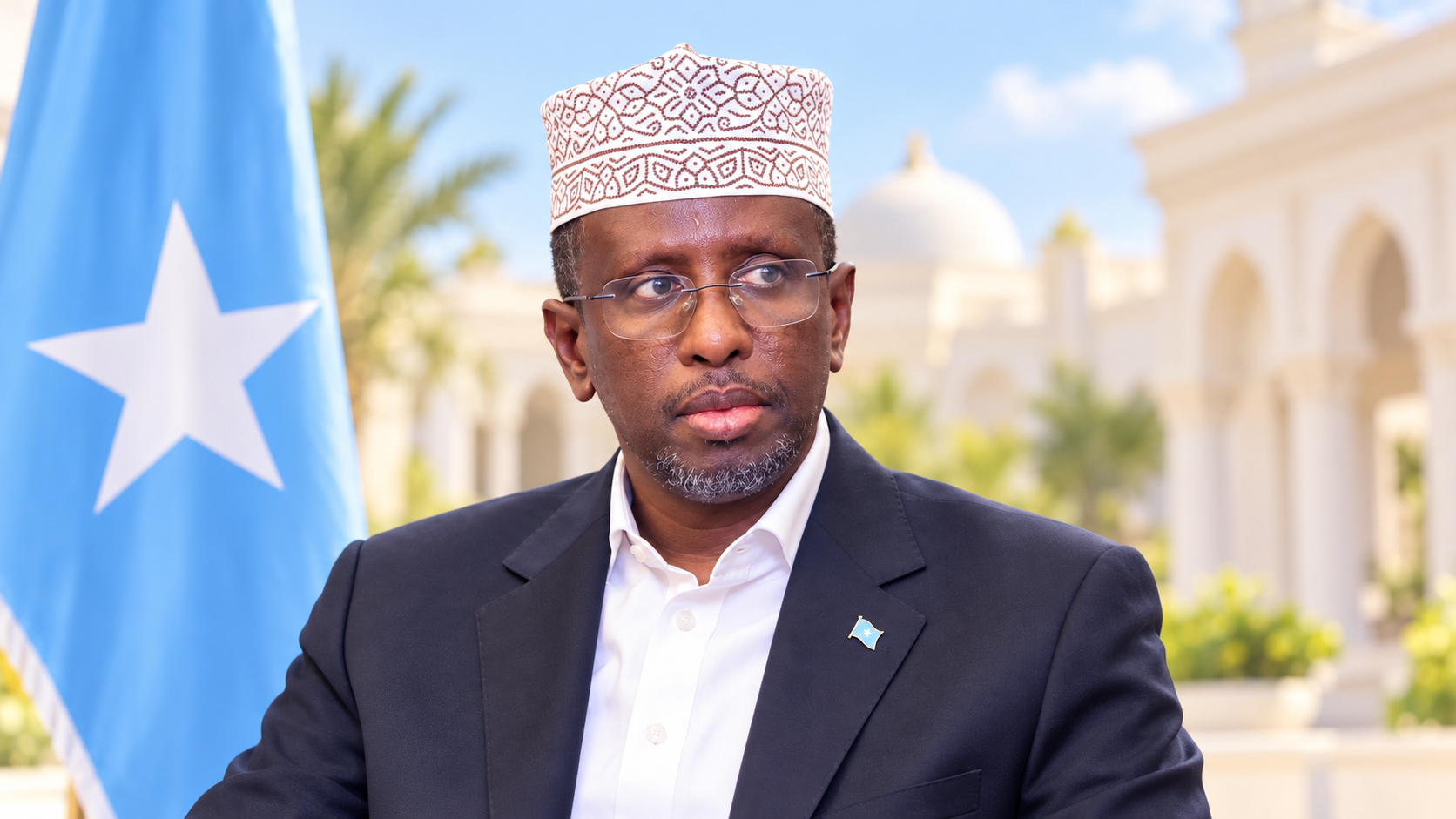
Featured image: Editorial portrait illustration of Sharif Sheikh Ahmed, based on a file photograph; background reimagined.
Reporting: Somalia Today; Hiiraan Online; FTL Somalia.