
October 12, 2026 | The Wider Chronicle | Somali Briefing
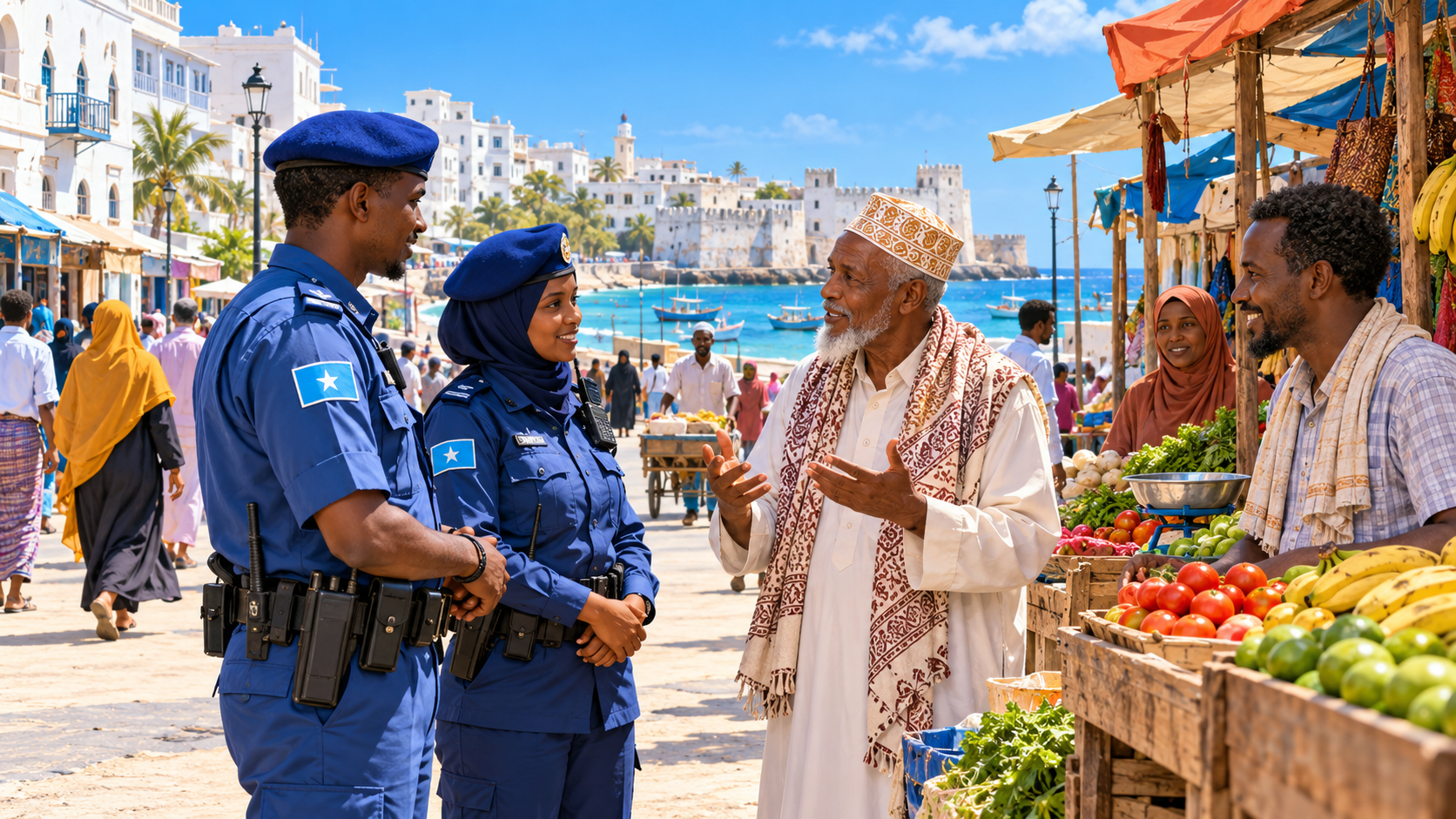
Editorial illustration.
Somalia’s security crisis cannot be judged only by announcements that government forces have captured another town or killed militant commanders. For a shopkeeper, security means operating without threats or extortion. For a farming family, it means reaching a market safely and returning home. For a soldier, it means receiving pay, supplies, and medical support when needed.
Al-Shabaab remains a resilient threat, exploiting gaps in government authority and divisions within communities. Military operations are necessary to protect people from its violence, but lasting progress depends on what happens after those operations. Somalia needs a security strategy that connects military gains to dependable policing, functioning local government, and political cooperation.
Hold recovered towns before promising more victories
The first practical priority should be securing places already recovered. In February, the Associated Press reported Somali government claims of gains supported by American airstrikes and expanded ground operations, while highlighting uncertainty over whether those gains could be consolidated. Capturing territory and maintaining effective authority are different achievements.
A realistic approach would require a plan for each recovered district before forces advance further. That plan should identify who will provide policing, how supplies will arrive, which civilian officials will administer the area, and how residents can report threats. Where immediate danger requires urgent action, stabilisation arrangements should follow quickly. Otherwise, soldiers may be asked to defend isolated positions while residents remain uncertain about who actually controls their community.
Success should be measured over months. A district that remains accessible, receives services, and has functioning local institutions represents a stronger gain than one repeatedly captured and lost. Publishing regular assessments of these conditions would make official claims more useful to the public.
Make soldiers’ support dependable
Security reform must include the ordinary needs of the people carrying out operations. The government and its partners should verify personnel records, review payment systems, and investigate unexplained interruptions in salaries or supplies. This is a proposed reform priority, rather than a claim that every unit faces the same problems. The purpose is to establish where weaknesses exist and correct them.
Direct payments to verified personnel, backed by independent checks and a protected complaints process, could reduce opportunities for diversion. However, digital payments alone cannot establish whether every listed soldier is serving. Payroll reform must therefore combine financial records with physical verification and accountable commanders.
Food, transport, equipment maintenance, and casualty evacuation also require predictable funding. Announcing new recruitment without budgeting for these recurring costs risks creating forces that exist on paper but cannot operate consistently. Building fewer dependable units may deliver more protection than expanding numbers beyond the resources available.
Give communities a safe way to report threats
Residents often have information that authorities need, but reporting it must not expose them to retaliation. Somalia should expand accessible reporting channels while establishing clear rules for confidentiality, follow-up, and protection. A hotline that collects complaints without producing a response can deepen distrust.
There is already a practical example to build on. The United Nations reported that community discussions in Xudur helped establish a free police hotline receiving reports of emergencies and security concerns. The lesson is that residents should help identify the problems a service is intended to solve. Expansion should depend on whether police can respond effectively, rather than simply on how many hotlines are launched.
Local policing also needs oversight. Complaints against officers should have a credible investigation process, and recruitment should avoid placing public protection under the exclusive control of one local faction. Community participation can improve trust, but it must include women, minority groups, displaced residents, and others whose concerns may otherwise be overlooked.
Treat political cooperation as a security requirement
Somalia cannot build dependable national security while political disagreements repeatedly threaten stability. In June, the UN secretary-general urged restraint and dialogue, while the UN mission warned about the risk of repeating the electoral crisis of 2021. That warning shows why political disputes belong within any serious assessment of security.
A practical response would be a federal–regional agreement covering command responsibilities, intelligence coordination, funding, and dispute resolution. It should establish arrangements that continue during political disagreements. Leaders do not need to agree on every constitutional or electoral question before agreeing that civilians must remain protected.
Such an agreement would need implementation checks. Regular meetings are insufficient unless decisions produce clear responsibilities and measurable results. Disagreements over deployments or resources should enter an agreed mediation process before they escalate.
Prepare for changes in foreign support
Somalia’s partners must also make their plans clear. Reuters reported in September that Washington was willing to allow a twelve-month drawdown of the UN Support Office in Somalia, with sources saying it would begin in January 2027. The office provides essential logistical support to African Union peacekeepers. That reported timetable creates a planning challenge; it does not establish that a workable replacement is already available.
Somali authorities, the African Union, and donors should identify which functions would be affected, what replacements would cost, and who would fund them. Transport, medical services, fuel, and maintenance need concrete arrangements. The transition should be assessed against operational readiness, with contingency plans for gaps that cannot be closed on schedule.
Judge progress by people’s daily lives
Somalia should publish a small set of understandable security measures: whether important roads remain usable, whether recovered districts retain functioning administrations, whether verified personnel receive support on time, and whether civilian complaints receive a response. Independent monitoring would help distinguish lasting improvement from temporary success.
These proposals will not end the insurgency quickly. They offer a practical way to make military effort more durable and public institutions more credible. Somalia’s strongest security achievement would be a growing number of communities where people can travel, work, seek justice, and report danger with confidence that someone will protect them.
Sources
Council on Foreign Relations: Conflict With Al-Shabaab in Somalia; Associated Press: Somalia’s renewed campaign against Al-Shabaab; United Nations in Somalia: community safety updates; UN secretary-general statement, June 4, 2026; Reuters: Somalia peacekeeping support, September 18, 2026.