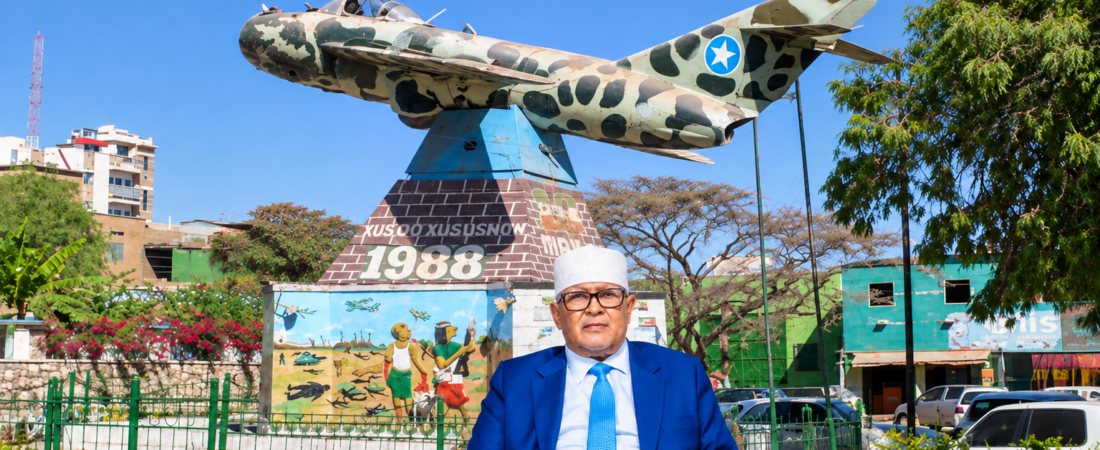
For over three decades, the breakaway region of Somaliland has pitched itself to the international community as a rare beacon of stability, democracy, and effective self-governance in the volatile Horn of Africa. Operating within the borders of the former 1960 British Somaliland protectorate, its leadership in Hargeisa has long argued that it possesses all the functional traits of a sovereign nation. However, this polished diplomatic narrative obscures a stark and increasingly volatile internal reality: Somaliland’s independence project is not a unified national movement, but a deeply localized ambition driven almost exclusively by a single clan family, fiercely resisted by the rest.
The Isaaq Clan and the Historical Drive for Secession
At the heart of Somaliland’s political deadlock is a profound ethnic and territorial disconnect. The push for total secession from the Federal Republic of Somalia is overwhelmingly powered by the Isaaq clan family. The Isaaq constitute the demographic and political majority in Somaliland’s central corridor, including the capital city of Hargeisa and the strategic Port of Berbera.
The Isaaq’s desire for independence is rooted in deep historical trauma. During the late 1980s, the military dictatorship of Siyad Barre waged a brutal, genocidal campaign against the Isaaq people, leveling Hargeisa and killing tens of thousands of civilians. For the Isaaq, dissolving the 1960 union with Mogadishu is viewed as a matter of historical justice, self-determination, and existential survival.
The Peripheral Clans and the Unionist Resistance
However, the borders Hargeisa claims do not belong to the Isaaq alone. To the west and the east lie vast territories inhabited by non-Isaaq clan families who did not experience the same historical trajectory and do not share the Isaaq ambition.
- The Western Frontier: In the west, the Gadabursi and Issa clans (of the Dir family) reside, holding a historic ambivalence toward secession and expressing growing grievances over political marginalization.
- The Eastern Frontier: The vast eastern regions of Sool and Sanaag are the ancestral homelands of the Dhulbahante and Warsangeli clans (of the Darod family).
For these peripheral clans, Somaliland’s independence is viewed not as liberation, but as the imposition of an Isaaq dominated hegemony. They overwhelmingly favor a unified Somalia, viewing their political future as part of the broader Somali federation centered in Mogadishu, rather than accepting minority status within an unrecognized state ruled from Hargeisa.
The Reality of Control: From Grievance to Territorial Loss
Crucially, this political fracture is compounded by a hard military and administrative reality: the Isaaq-led government has no meaningful control over these non-Isaaq populations. This lack of control transitioned from a political grievance to a definitive territorial loss during the bloody conflict over Las Anod, the capital of the Sool region.
Following months of local uprisings against what residents termed an “Isaaq occupation,” unionist Dhulbahante militias decisively defeated Somaliland’s military forces, expelling them from the region. The subsequent establishment of the SSC-Khaatumo administration which was promptly recognized by Mogadishu as an official federal member state of Somalia shattered Hargeisa’s claims of territorial sovereignty. It demonstrated to the global community that when pushed, the Isaaq led administration lacked the military power, administrative reach, and local legitimacy to govern beyond its traditional clan boundaries.
Why the United Nations and African Union Defer Recognition
This internal fragmentation explains why international bodies like the United Nations and the African Union have consistently declined to recognize Somaliland. International diplomats recognize that granting statehood based on colonial-era borders would mean trapping hundreds of thousands of unionist Darod and Dir clan members inside a state they reject.
Doing so would effectively legitimize a secondary secessionist crisis. These non-Isaaq clans would immediately claim their own right to secede from Hargeisa, plunging the region into further conflict.
Conclusion: A Project Paralyzed by Its Own Map
Somaliland’s primary obstacle to independence is no longer just the diplomatic veto of the central government in Mogadishu, but its own internal map. As long as the independence project remains an exclusively Isaaq ambition, and as long as the peripheral clans successfully resist Hargeisa’s control, Somaliland cannot present itself as a unified nation. Until the region’s leadership can reconcile its borders with the actual political will of the diverse clans living within them, its dream of sovereign recognition will remain paralyzed by the realities of Somali clan geopolitics.