
October 11, 2026 | The Wider Chronicle
Attacks in the Middle East, a dispute over Russian fuel exports and new warnings about the global economy lead this edition of World Briefing. The developments below were reported on October 10–11. Casualty figures and official claims may change as further information becomes available.
What happened
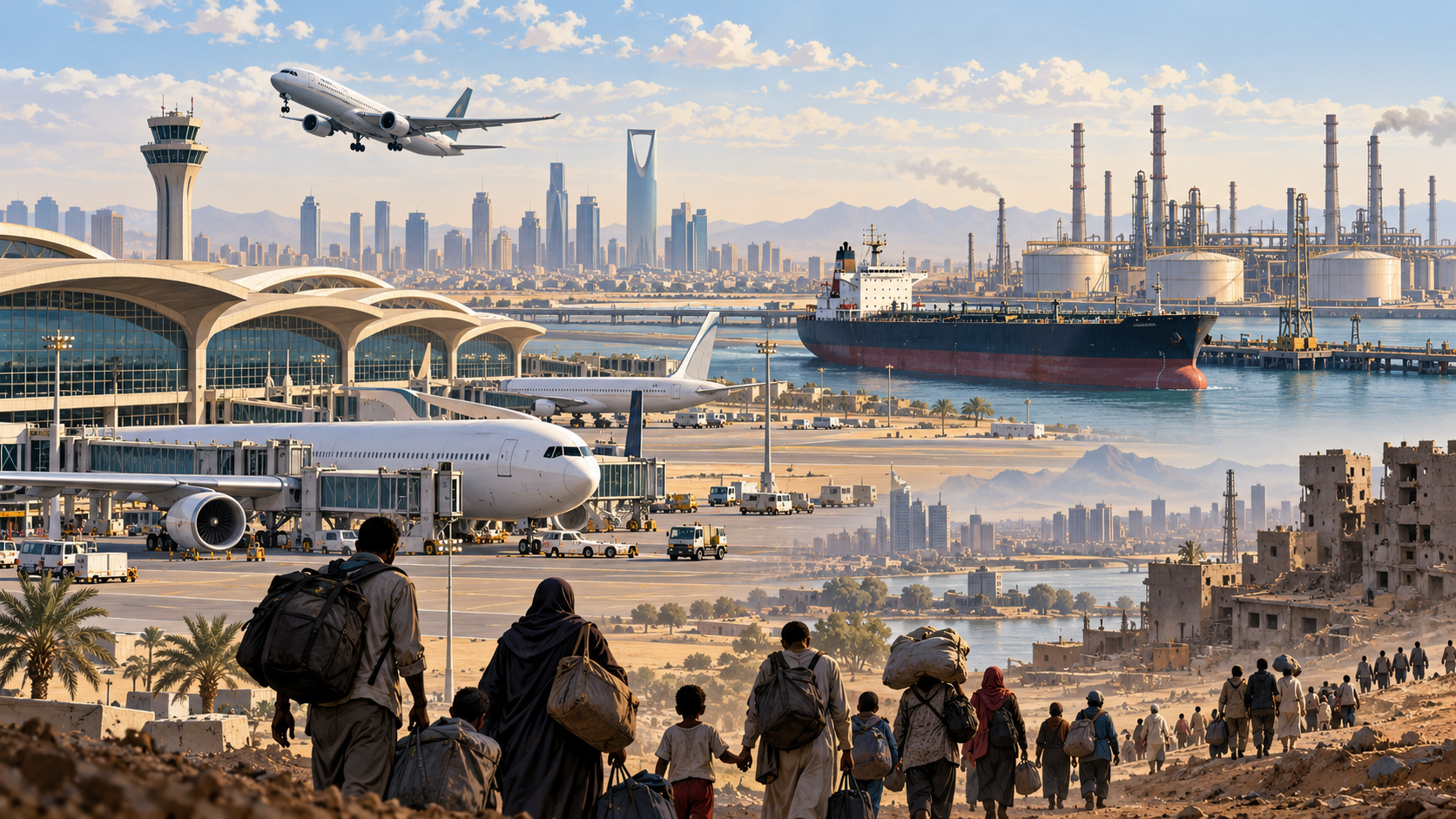
Riyadh airport attacked: Saudi civil aviation authorities said a missile strike on King Khalid International Airport killed 12 people on Saturday. President Donald Trump said he was considering whether American forces should join Saudi strikes against Yemen’s Houthis, who claimed earlier attacks this week. The Associated Press also reported that the UAE rescued 22 crew members from a burning tanker; the cause was not established in the UAE statement.
Ukraine and Russian diesel: Trump called for new Ukrainian leadership on Saturday after announcing a Russian diesel agreement intended to ease fuel costs. Ukrainian and European officials objected, warning that additional export income would support Moscow’s war. Separately, Ukrainian authorities reported at least 20 deaths from Russian attacks in the Zaporizhzhia region, including three children. These developments put energy policy and support for Ukraine at the center of a fresh diplomatic dispute.
Sudan’s civilian toll: Emergency Lawyers, a rights group, said a drone strike near the Ethiopian border killed 41 displaced people, including eight children. The group attributed Friday’s attack in Blue Nile province to the Rapid Support Forces. AP reported that the RSF had not commented on the allegation. The United Nations condemned the incident and called for accountability, as displaced families face continuing danger.
Why it matters
Reuters reported on Sunday that war-related energy disruption, rising interest rates and debt pressures will dominate this week’s IMF–World Bank meetings in Bangkok. World Bank President Ajay Banga warned about the combined strain of energy costs, fertilizer prices and El Niño. Lower-income countries face particular vulnerability when borrowing costs increase while governments struggle to fund public services.
The Wider Chronicle’s analysis: these stories show how security decisions can reach far beyond a battlefield. Transport disruption can raise business costs, while fuel policy can complicate diplomatic partnerships. Humanitarian protection deserves attention alongside those economic consequences, especially where families have already fled violence.
Who benefits or loses
In principle, additional fuel supply could help consumers if it reduces prices, but delivery and market conditions will determine the actual result. The diplomatic trade-offs remain contested. Civilians facing attacks and displacement bear immediate losses, while governments confronting higher import bills have less room to meet competing needs.
What may happen next
Watch for a U.S. decision on involvement in Yemen, further verification of the Sudan strike, and announcements from the Bangkok meetings. These are developments to monitor, rather than predictions of a particular outcome. This briefing reflects the reports available at publication.
Sources and further reading
Associated Press: Middle East developments; Associated Press: Ukraine and Russian diesel; Associated Press: Sudan drone strike; Reuters: IMF–World Bank meetings.